November 22, 2026
Decluttering Before Moving: What To Get Rid Of
There's a specific moment that hits every move. You're four hours into packing, you open a cabinet you haven't opened in two years, and you find a bread maker, a stack of takeout menus from a restaurant that closed, and eleven travel mugs.
And you think: am I really about to wrap all of this in paper and pay someone to drive it to my new house?
Decluttering before moving is the single highest-return thing you can do, and it's the step most people skip because it feels like a delay when they're already short on time. It isn't a delay. Every item you remove is one you don't pack, don't pay to transport, don't carry up a staircase, and don't unpack and find a home for on the other end. You pay for each object four times over.
This guide covers exactly what to get rid of, by category and by room, how to decide fast, what the real timeline looks like, and where everything goes once you've decided.
Not Sure What to Keep?
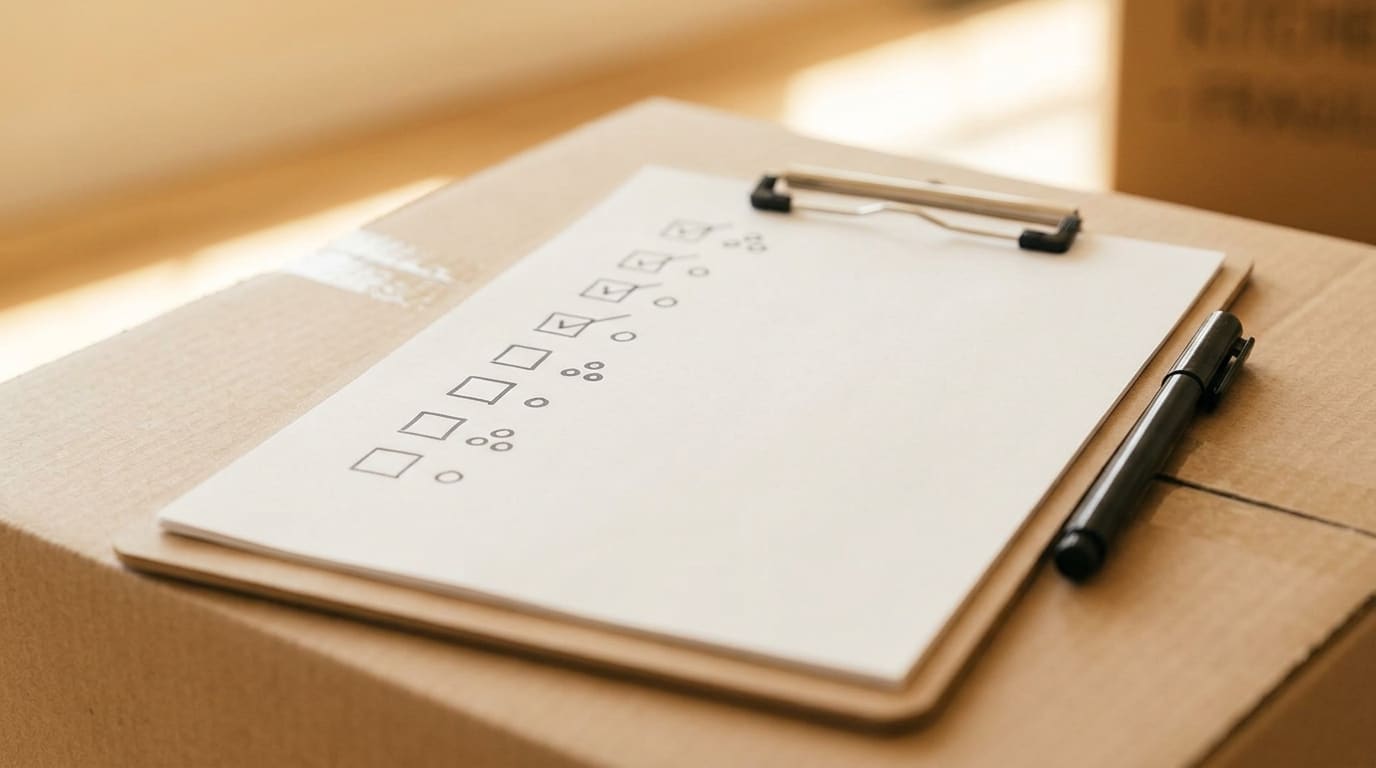
Download our Decluttering Before Moving Checklist with room-by-room guidance.
Why Decluttering Before Moving Beats Decluttering After
People routinely tell themselves they'll sort it out at the new place. It almost never happens, for reasons that are structural rather than motivational.
You pay to move every box
Full-service movers price primarily on weight or volume. That's not a quirk, it's the fundamental unit of the industry. Interstate moves in particular are commonly quoted on shipment weight, which means every pound of things you don't want is a line item on your invoice.
Even a DIY move follows the same logic in a different currency: more boxes means a bigger truck, more trips, more fuel, more friends owed dinner, and more hours.
Unpacking is harder than packing
Packing is mechanical, wrap it, box it, label it. Unpacking is a decision at every single item, because now you have to decide where it lives in a space you don't know yet.

Picture what you want to use in the new space before filling boxes.
Arriving with 30% less means 30% fewer of those decisions during the exact week you have the least capacity to make them.
Boxes you don't unpack never get unpacked
Every experienced mover knows the garage boxes. The ones that come off the truck, get stacked, and are still stacked at the next move. Once a box survives the first month unopened, it tends to survive indefinitely.
If you wouldn't unpack it in the first month, don't move it.
A new home is a rare clean slate
You will never again have this good an excuse to touch every object you own. After the move, decluttering means creating a project. During the move, it's already happening, you're handling everything anyway. The marginal cost of deciding while the thing is already in your hand is close to zero.
What to Get Rid Of: The Universal Categories
Start here, before you go room by room. These categories exist in every home and require almost no deliberation, which makes them the fastest possible progress.
Anything broken or missing pieces
The lamp that flickers, the blender with no lid, the chair with the wobble you've been meaning to fix for three years. If you haven't repaired it by now, moving it will not create the motivation.
Expired anything
Food, medication, cosmetics, sunscreen, cleaning products, batteries. Most of this can't or shouldn't be moved anyway.
Duplicates beyond what you use
Not "beyond what you own", beyond what you use. Three can openers, six spatulas, four sets of measuring cups, nine reusable bags multiplied by however many are in the trunk.
Keep the best one and a genuine backup where a backup makes sense.
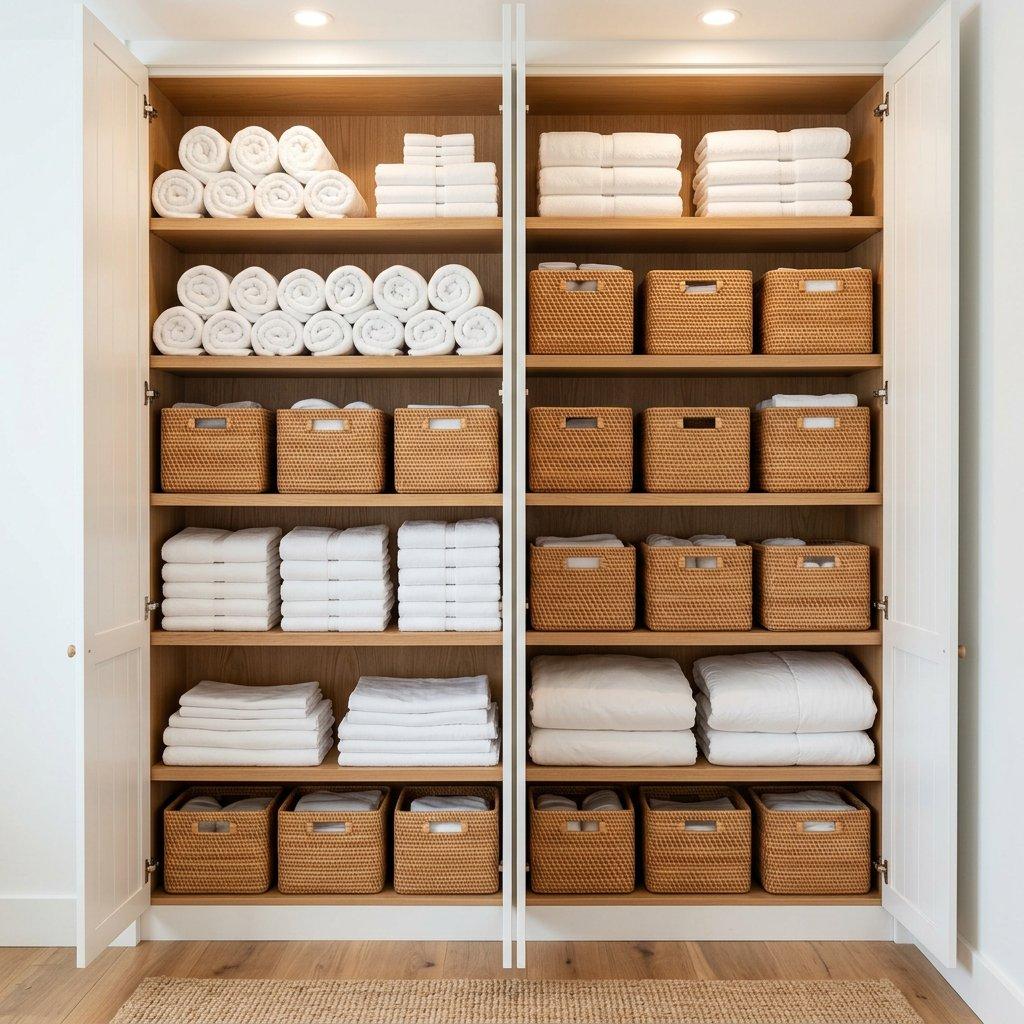
Group similar items so you can see what you already have.
Anything for a life you're not living
The exercise equipment from the phase that ended. The hobby supplies from the hobby that didn't take. Clothes for a size or a job or a climate that isn't current.
This is quiet, it's heavy, and it's where most of the volume actually is.
Paper
Old bills, manuals for appliances you no longer own, expired warranties, school papers from years past, magazines. Scan what has genuine future value; recycle the rest.
Manuals in particular are almost all findable online in thirty seconds, there is no reason to move a drawer of them.
Things you're keeping out of obligation
The gift you never used. The inherited item you don't like. The expensive mistake.
The reframe that helps: the money and the sentiment are already spent. Storing the object doesn't recover either one. It just adds a moving cost on top of a cost you already paid.
Room by Room: What Not to Move
Kitchen
The kitchen carries more dead weight than any other room, and it's also the heaviest per box, which means it's where purging pays the most.
Go: - Single-purpose gadgets you've used fewer than three times - Chipped, cracked, or mismatched dishes and mugs - Plastic containers with no lids, and lids with no containers - Warped or scratched non-stick pans - Duplicate utensils - Opened pantry items you won't finish before the move - Anything you kept "for entertaining" that hasn't been used in two years
Keep: - Daily-use equipment - Genuinely good cookware - Full sets in usable condition - Sealed, in-date pantry staples worth transporting
Kosher kitchens: a move is the natural moment to reassess your separation setup, whether you're carrying forward the same designations, whether any items need re-evaluation before use in a new kitchen, and how the new space will physically support the separation. Any question about the status of specific utensils or kashering should go to your Rav rather than being decided during packing at 11 p.m.
Bedrooms and closets
Go: - Anything unworn in the last year, allowing a full seasonal cycle - Wrong-size clothing, unless a specific known change is underway - Worn-out shoes, stretched hangers, damaged linens - Sheets that don't fit any bed you own - Pillows past their life, most need replacing every couple of years
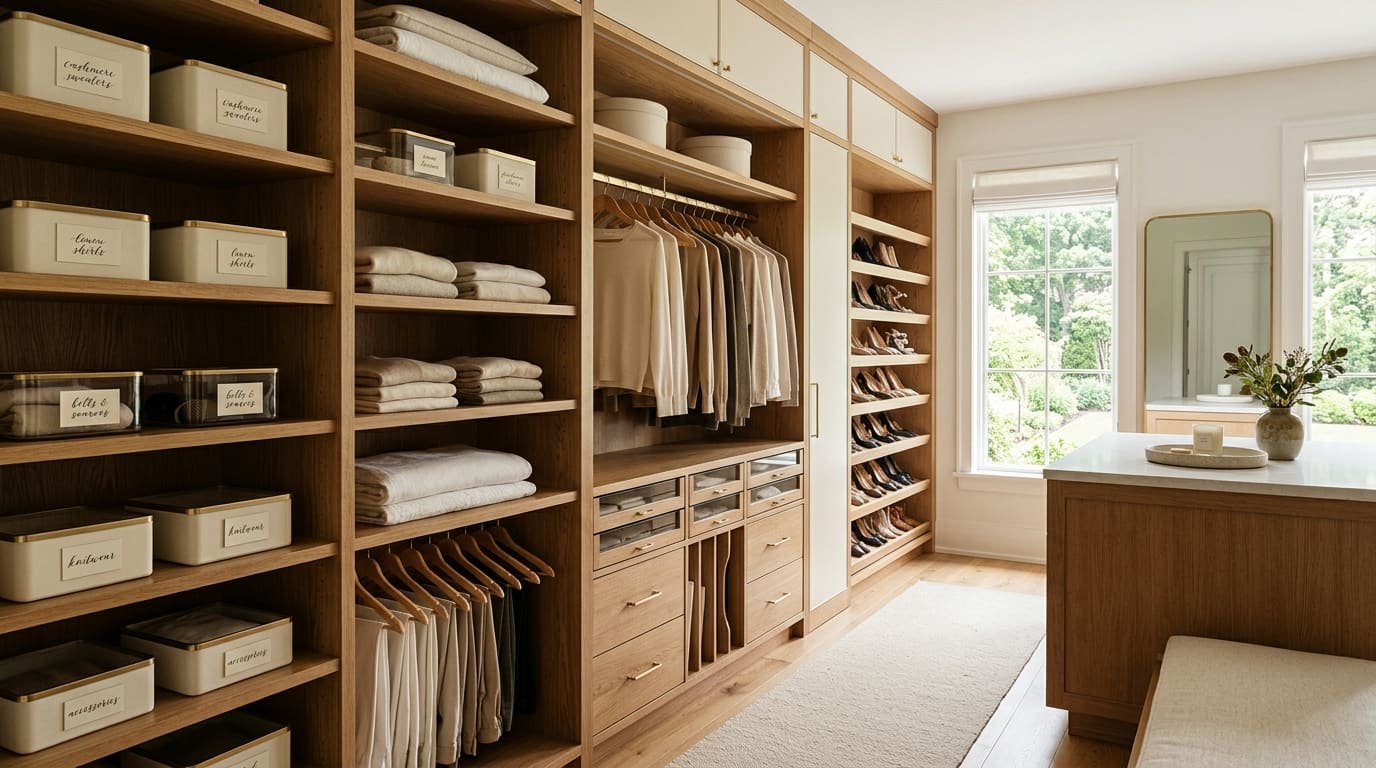
Work through one room or closet at a time.
Keep: - What fits, what you wear, what's in good condition - One good set of guest linens
Fastest closet method: pull everything out. Hang back only what you'd wear this week or would genuinely miss. Whatever's left in the pile is your answer, and you got there in fifteen minutes instead of two hours of item-by-item.
Bathrooms
Almost nothing here should move. It's the cheapest room to replace and one of the messiest to transport.
Go: - Expired medication, take it to a pharmacy take-back rather than the trash or the drain - Old cosmetics and half-used products - Nearly empty bottles - Worn towels - Anything liquid you don't need, since leaks in transit are common and ruinous
Living areas
Go: - Furniture that doesn't fit the new floor plan, measure first, this one is expensive to get wrong - DVDs, CDs, and media you no longer play - Books you won't reread and didn't love - Décor that belonged to the old house's style - Dead or struggling plants, plus any plant that can't legally cross state lines
Measure before you decide on the big pieces. Moving a sectional that doesn't fit the new room is one of the most expensive mistakes available during a move, and it's entirely avoidable with a tape measure and a floor plan.

Check drawers, shelves, and storage bins within the same room.
Kids' rooms
Go: - Outgrown clothing and shoes - Broken toys and games with missing pieces - Books past their reading level - The vast majority of accumulated craft output
Involve them selectively. Older kids can choose what stays; outgrown clothes are better handled without a committee. Keeping a small number of favorites in a labeled "open first" box makes the first night in a new house dramatically easier.
Garage, basement, and storage
This is where the real volume hides, and it's the area people leave until last, which is exactly backwards.
Go: - Duplicate or broken tools - Old paint, chemicals, and solvents, which movers generally won't transport and which need proper hazardous-waste disposal - Sports and camping equipment from abandoned activities - Boxes unopened since the last move - Empty boxes kept "for moving," which are usually the wrong sizes anyway
The unopened-box rule: if it's been sealed since the last move and you can't name what's in it, you have your answer without opening it.
Need Help?
Our team can help you declutter and organize before your move.
Book Your Moving Consultation
Deciding Fast: Criteria That Work Under Pressure
Moves have deadlines, which means you don't have the luxury of contemplating each item. Use criteria and run them in order, stopping at the first clear answer.
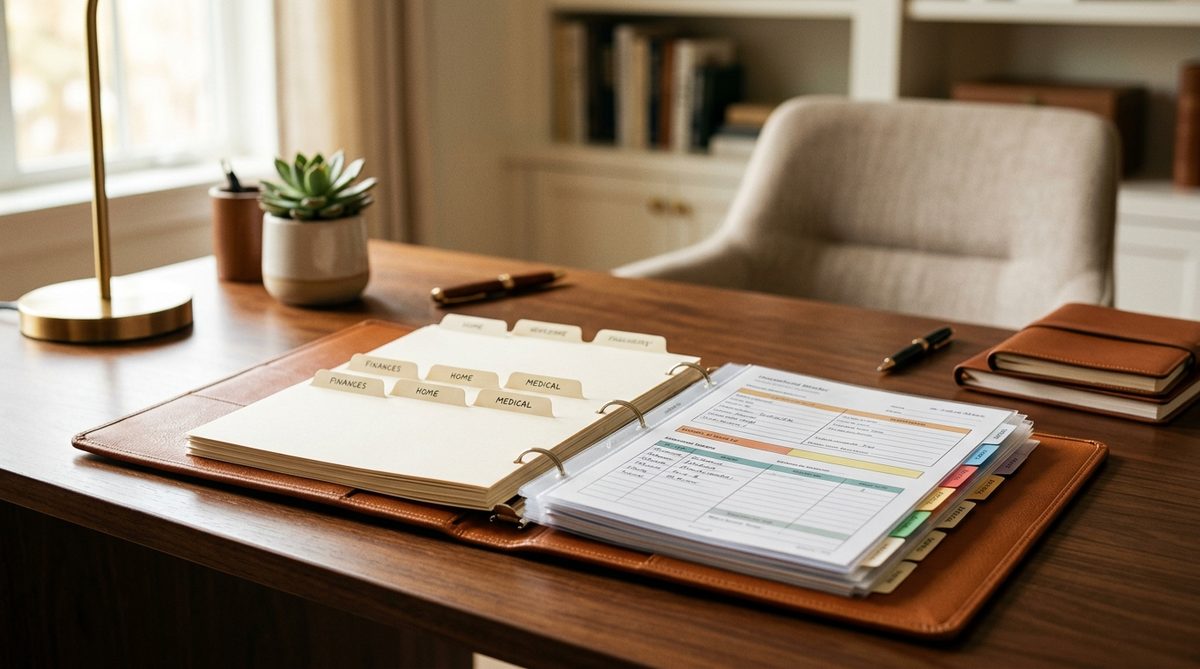
Write down decisions that need another person’s input.
1. Is it broken, expired, or incomplete? → Go. No further thought. 2. Have I used it in the past year? → Two years for genuinely seasonal items. 3. Would I pay to move this? Assign it a rough dollar figure. Would you pay $15 to transport this lamp? This is the single most effective question during a move, because it converts a vague feeling into a concrete trade. 4. Would I buy it again today, at full price? 5. Do I have a place for it in the new home? If you can't name the room, that's meaningful. 6. Is it replaceable for under $30 if I turn out to be wrong? If yes, the risk of letting it go is genuinely small.
Question 3 is the one that does the heavy lifting. People who can't decide in the abstract decide instantly when the item has a transport price attached.
The Timeline: When to Do What
Decluttering compressed into the final week doesn't work. It becomes triage, and triage means everything gets moved.
8 weeks out, storage areas
Garage, basement, attic, storage unit. Highest volume, lowest emotional weight, and no impact on daily life while you work.
This is also when to book donation pickups for large items, which often have multi-week lead times.
6 weeks out, closets and clothing
Full seasonal wardrobes. Enough runway to sell anything worth selling.
4 weeks out, kitchen and living areas

Pack the items you’ve already decided to keep.
Stop restocking the pantry beyond what you'll eat. Start using down frozen and shelf-stable food deliberately.
3 weeks out, kids' rooms and shared spaces
Do this with time to spare, because it always takes longer than planned and involves negotiation.
2 weeks out, bathrooms and final sweep
Last pass through everything. Anything still undecided defaults to go, because you're now paying to move indecision.
The last week, no decluttering
Pack only. Decisions made at this stage are made badly, and you need the energy for logistics.
If you're starting late: skip the room-by-room approach and hit only the three highest-return zones, garage, closets, kitchen. That captures most of the volume in a fraction of the time. The full sequence, alongside everything else that has to happen, is in the moving checklist.
Where It All Goes
Decide the outflow before you start, or the piles simply relocate.
Keep donation and giveaway boxes out of the moving stack.
- Donate. Local shelters, thrift organizations, community groups, schools. Call first, most have specific lists of what they can accept, and being turned away with a loaded car mid-move is genuinely demoralizing. Book large-item pickups several weeks ahead.
- Sell, selectively. Only for items worth real money: furniture, electronics, appliances, quality tools. Set a hard deadline, anything unsold ten days before the move gets donated. An unsold sofa is a moving problem, not an asset.
- Give directly. Buy-nothing groups and community networks move kids' items, baby equipment, and furniture faster than any other route.
- Recycle and dispose properly. Electronics, batteries, paint, chemicals, and textiles all have dedicated channels. Paint and solvents in particular can't go in household trash and won't go on the truck.
- Trash without guilt. Some things are finished. Searching for a virtuous destination for a broken bookshelf is a delay wearing a good outfit.
Get everything out of the house before packing day. Donations in the car or already gone. Not staged in the garage, where they will be loaded onto the truck by a mover who has no way of knowing they weren't supposed to come.
Common Mistakes When Decluttering Before Moving
1. Waiting until packing starts. Decluttering while packing means doing two jobs at once, badly. Fix: finish the purge before boxes come out.
2. Keeping "just in case" items. Most are replaceable for less than the cost of moving them. Fix: apply the under-$30 replaceability test.
3. Not measuring the new space. Furniture that doesn't fit is the most expensive avoidable error in any move. Fix: floor plan and tape measure before deciding on large pieces.
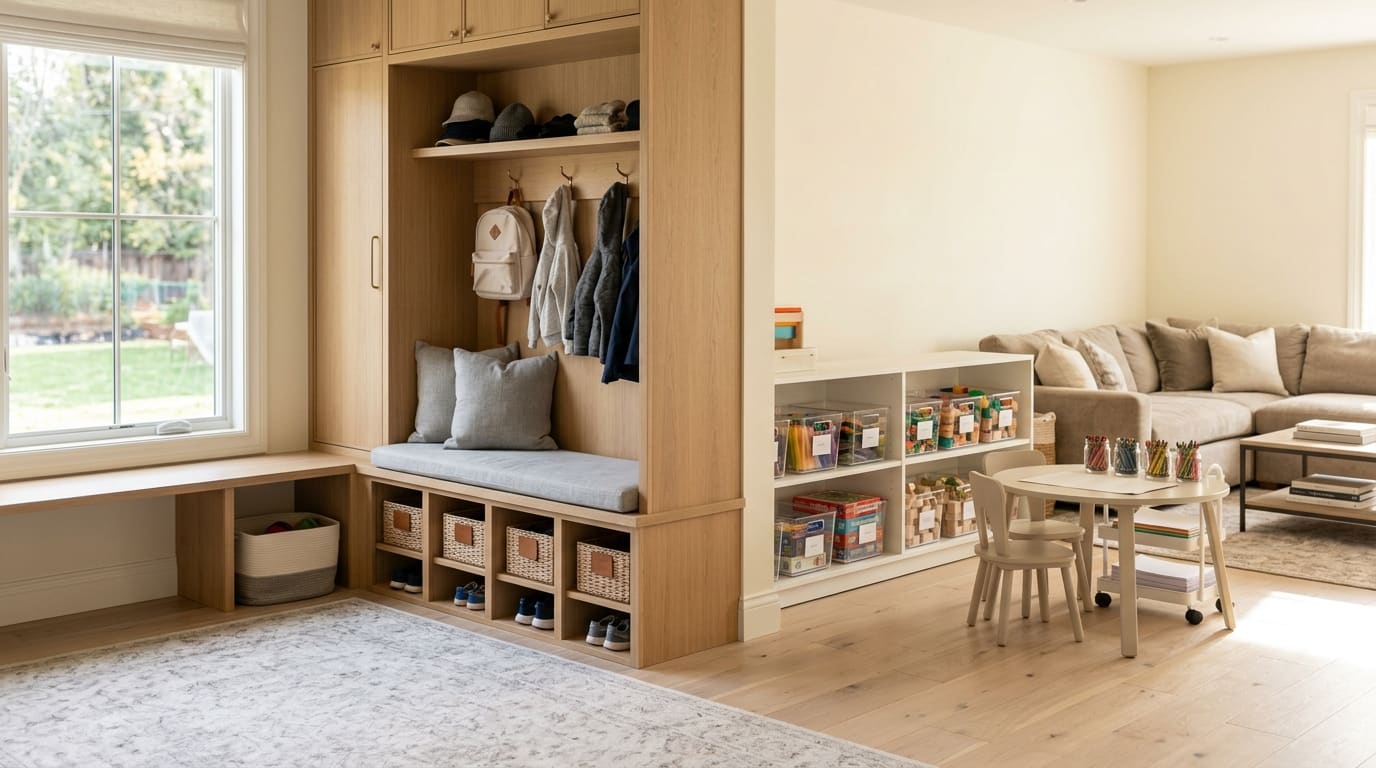
Give frequently used items a clear home as you settle in.
4. Leaving donations in the garage. They get loaded. Fix: out of the house entirely, ideally the same day you decide.
5. Starting with sentimental items. They're the slowest decisions and they'll consume the energy you needed for the garage. Fix: storage areas first, memory boxes last.
6. Trying to sell everything. Listing, messaging, and no-shows cost more hours than most items are worth. Fix: sell only genuinely valuable pieces, donate the rest.
7. Packing what you haven't decided on. "I'll figure it out there" means it stays boxed for years. Fix: every item gets a decision before it gets tape.
Frequently Asked Questions
How much should I declutter before moving?
Aim to remove 20-30% of your belongings, which is achievable in most homes without touching anything you'd miss. Focus on storage areas, duplicate items, and anything unused in the past year, these three categories alone usually get you there. Every item removed cuts packing time, transport cost, and unpacking decisions.
When should I start decluttering before a move?
Start eight weeks out if you can, working from storage areas toward daily-use spaces and finishing at least a week before packing begins. Decluttering compressed into the final days becomes triage, and triage means everything ends up on the truck.
What should I definitely not move to a new house?
Don't move broken or incomplete items, expired food and medication, hazardous materials like paint and solvents that movers won't transport, furniture that doesn't fit the new floor plan, or boxes that have stayed sealed since your last move. Also leave behind duplicates and anything belonging to a phase of life you're no longer in.
Is it cheaper to declutter or to move everything?
Decluttering is almost always cheaper, because full-service movers price on weight or volume and every unwanted item is a billable pound. Even a DIY move costs more with extra volume through truck size, trips, and hours. The savings compound on the other end, since fewer boxes means less unpacking.
Should I sell or donate items before moving?
Sell only genuinely valuable items, furniture, electronics, appliances, quality tools, and donate everything else. Listing and coordinating sales takes hours per item, which is time you don't have during a move. Set a firm cutoff around ten days before moving day and donate whatever hasn't sold.
How do I declutter sentimental items before a move?
Handle sentimental categories last, after you've built decision-making speed on easier areas. Photograph items you want to remember but don't need to store, keep the best example rather than the full set, and set a physical limit like one memory box per person so the container makes the decision for you.
What's the fastest way to declutter if my move is in two weeks?
Skip room-by-room and target the three highest-volume zones: garage or storage, closets, and kitchen. Use one question on every item, would I pay to move this? Anything you hesitate on goes, because hesitation at two weeks out means it will still be boxed a year from now.
---
Ready for a Home That Works For You?
The purge is the hard part, and it's the part that decides what the new house feels like in month two. Arrive with less and you unpack into a home. Arrive with everything and you unpack into the same house in a different building.
We do this work alongside families, deciding faster because we carry no history with your belongings, and setting up the new space so it starts organized instead of getting organized eventually. Our packing tips cover what happens after the purge, once the keep pile is settled.
- ✓ Professional Organizing, before the move, or in the new space, or both
- ✓ Moving & Unpacking, decluttered, packed, and set up correctly the first time
- ✓ Household Management, routines and systems established from day one
- ✓ Ongoing Support, so the new home stays the way it started
Related Reading


Sort + Place is a professional organizing and household management practice serving families in Lakewood, New Jersey and the surrounding tristate area.
Want this running in your own house?
We build the systems, label the shelves and train the people who keep it all going.
Book Your Consultation