
July 14, 2026
Why Every Home Needs A Digital Inventory System
Ask most people how many bottles of olive oil they own and they'll guess. Ask what's in the third bin in the garage and they'll shrug. Ask them to list everything they'd need to replace after a fire and they'll go quiet.
That isn't a personal failing. A modern household holds thousands of items and nobody can keep thousands of items in their head. The cost just arrives in increments small enough not to notice: a duplicate here, an expired jar there, twenty minutes hunting on a Tuesday.
A home inventory system is the fix, and the case isn't about neatness. It's about money you spend twice, food you pay to throw away, a claim you couldn't currently file, and the fact that all of it sits in one person.
The costs you're already paying

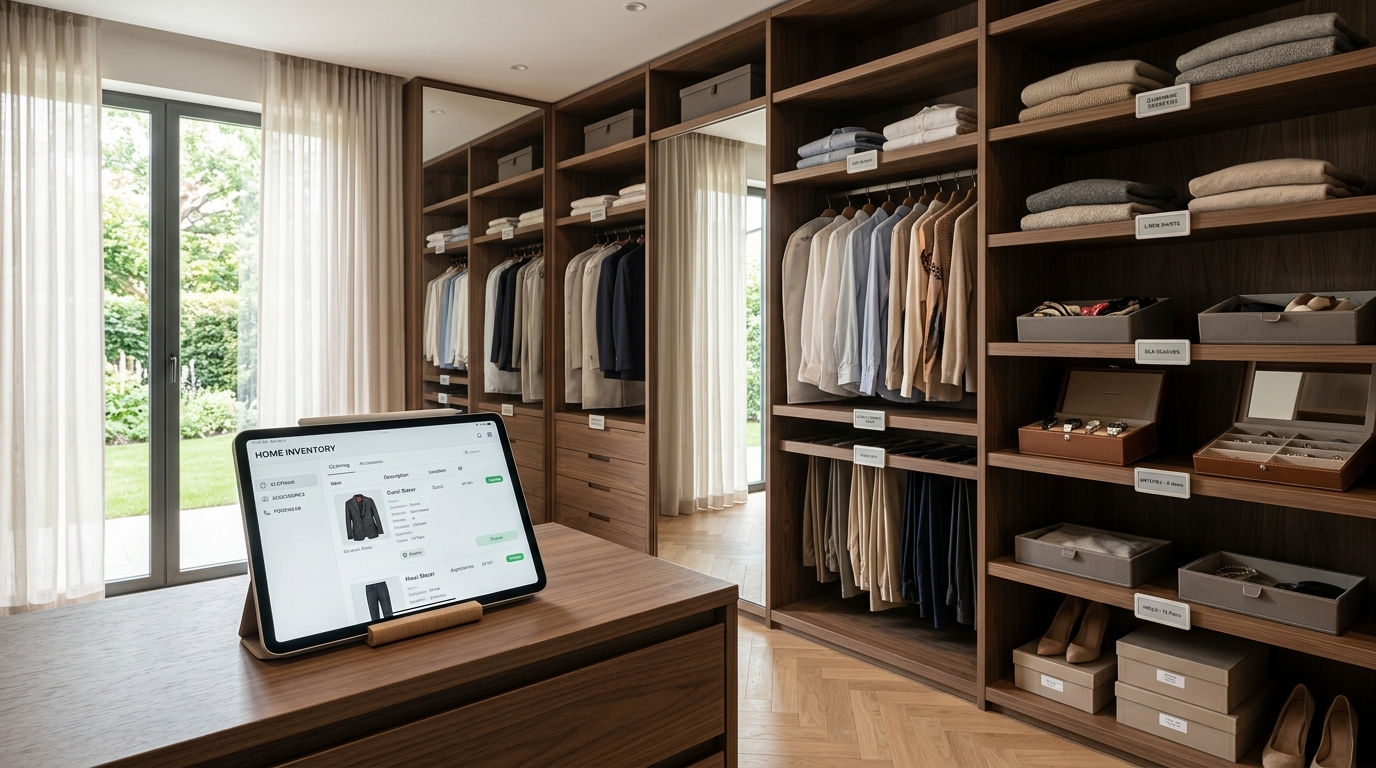
That duplicate olive oil is just the visible 10%. Here is the app that stops it.
Inventory feels optional because its absence doesn't produce a bill. It produces a scatter of small unattributed losses that never get added up.
Buying what you own. Spices are the running joke, but it's batteries, tape, sunscreen, shampoo, chargers, socks. The mechanism is blameless: you cannot see inside your house from a store aisle, and faced with uncertainty, buying is the safe choice. Individually trivial. Across a year, across every category, not trivial at all.
Food you paid for and binned. Something goes behind something else and stops existing. It reappears three weeks past its point and goes in the trash, having been paid for twice, once at purchase and once in the shelf space it held.
Time. Where are the light bulbs, the packing tape, the good scissors, the charger for the old tablet. Fifteen minutes here, ten there. The least visible cost and one of the largest, because it recurs forever and never appears on a statement.
The claim you can't file. This one stays invisible until it's catastrophic. Claims are settled on what you can document. After a fire or a burglary the adjuster asks what you owned, and reconstructing a household from memory, under stress, possibly displaced, is close to impossible. Most people substantially under report. The gap between what you owned and what you can prove you owned is money you don't get back.
The load on one person. The largest cost and the one people name last. In most houses one person knows what's in it. That person becomes the lookup service, texted from the store, called at work about where something is, rebuilding the shopping list every week, noticing what's low. That isn't a chore, it's a continuous background process running whether or not anyone acknowledges it.
An inventory moves that out of a person and into a structure. That's the real argument.
What changes when you have one
Shopping stops being reconstruction. The list builds itself from what's actually low, rather than from someone standing in the kitchen trying to remember.
Running out becomes rare and boring. A current count means you see it coming, calmly, instead of finding out at the shelf.
Other people can act. A spouse, a teenager, a cleaner or a manager can all see the same information. Nobody has to be found first.
The house survives your absence. An undocumented home drifts the moment the person holding it steps away. A documented one keeps functioning, imperfectly, but functioning.
Want to Start Simple?
Download our free Home Inventory Starter Guide with templates and tracking sheets.
Why digital, specifically
Paper works, genuinely, for a small household tracking a short list in one location. Past that it fails in four specific ways.
It isn't with you in the shop, which is the moment of use. Only one person can hold it. It can't be searched, so finding something means reading the whole thing. And it can't tell you anything, so noticing what's low is still your job.
Digital wins whenever the information needs to leave the house, whenever more than one person needs it at once, past roughly fifty items, or whenever you'd rather be told than have to remember to check.
Who benefits most

Start with what costs you money when you forget it. Running inventory and shopping together.
The return scales with size and complexity. A single person in a small flat gains a little. A family of six gains a lot. A household with staff, or with more than one property, gains the most, because there the inventory isn't a convenience, it's how work gets delegated at all.
If you keep a kosher kitchen the case is sharper again, since separation, Pesach turnover and multiple sets of everything multiply the number of things that have to be tracked accurately rather than approximately.
The objections, taken seriously
"It'll take a weekend.". Only if you try to catalogue the house, which nobody has ever finished. Twenty staples takes an hour, and adding things as you buy them does the rest inside a month.
"I'll never keep it updated.". True if entry is slow. If adding an item takes seconds and attaches to something you already do, like unloading groceries, it survives.
"My house is already organized.". Organization and inventory answer different questions. Organization tells you where a thing belongs. Inventory tells you how much you have and when to replace it, and tells you that while you're standing in a shop rather than standing in your pantry.
Frequently Asked Questions

One room at a time, rather than a whole house at once. Choosing an app a family can keep up.
What is a home inventory system?
A record of what your household owns, how much, where it's stored and when it needs replacing, kept somewhere everyone who needs it can reach. It covers consumables, equipment and valuables, and it exists so the information lives in a structure rather than in one person's memory.
Why does every home need a home inventory system?
Because the costs of not having one are real and invisible: re buying what you own, throwing away food that disappeared behind something else, time lost hunting, an insurance claim you couldn't fully document, and one person carrying the household's information alone. None of these appear on a bill, which is why they go unaddressed.
Is a digital inventory better than a written one?
Digital wins when you need the information away from home, when more than one person needs it at once, past roughly 50 items, or when you want alerts rather than having to remember to check. Written lists work fine for a small household tracking a short list in one location.
How does a home inventory help with insurance?
Insurers settle on what you can document, and reconstructing a household from memory after a fire or flood is extremely difficult. Most people substantially under report. A record with photos, model numbers and purchase dates, backed up outside the home, closes the gap between what you owned and what you can prove you owned.
Will a home inventory system actually save money?
The savings come from three places: not re buying what you own, throwing away less food, and buying at planned times rather than in emergency trips at full price. The effect scales with household size, so larger families see considerably more return.
What's the biggest reason people abandon home inventory systems?
Entry friction and scope. Systems that need a full house catalogue before they're useful get abandoned partway, and systems where adding an item takes more than a few seconds stop being updated within weeks. Starting with twenty staples and picking a fast input method addresses both.
Do I need a home inventory if I already have an organized house?
Yes, because they solve different problems. Organization tells you where things belong. Inventory tells you how much you have and when to replace it, and it tells you that while you're standing in a store rather than standing in your pantry.
Ready for a Home That Works For You?
The argument isn't tidiness. It's that a household running on one person's memory is fragile, expensive and exhausting for that person, and none of those costs show up anywhere you'd look.
We build the whole picture: organized spaces where an inventory is possible to maintain, tracking everyone in the house can use, and the routines that keep the record true.
Related Reading


Sort + Place is a professional organizing and household management practice serving families in Lakewood, New Jersey and the surrounding tristate area.
Want this running in your own house?
We build the systems, label the shelves and train the people who keep it all going.
Book Your Consultation