October 29, 2026
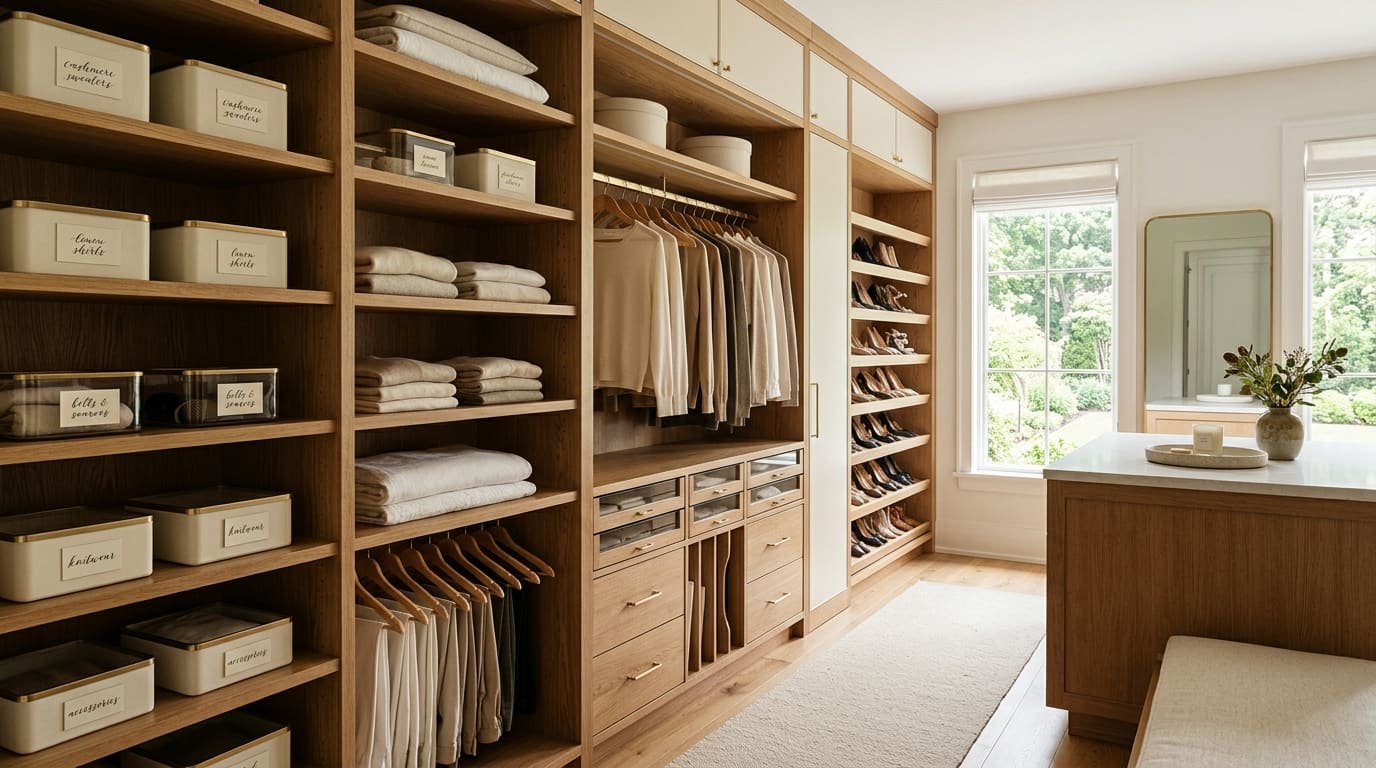
How To Declutter Your Home Without Feeling Overwhelmed
You've watched the videos. You know how it's supposed to go: someone empties a closet, holds each item, feels a wave of clarity, and by minute nine everything is folded into identical bins.
Then you open your own closet and the feeling is not clarity. It's dread, and then a strange, heavy tiredness that arrives before you've moved a single thing.
That reaction isn't laziness or a lack of willpower. Learning how to declutter your home without feeling overwhelmed is mostly a matter of reducing the number of decisions you face at once, because the deciding, not the physical effort, is what actually stops people. Every item is a small judgment call, and a full closet is four hundred of them stacked in a row.
This guide gives you a different approach: how to start small enough to finish, clear criteria so decisions get faster, scripts for the genuinely hard items, and a maintenance routine so it doesn't quietly refill.
Need Help Creating Systems That Last?
Sort + Place helps busy families organize, simplify, and maintain their homes with customized systems that save time every day.
Why Decluttering Feels So Overwhelming
Understanding the mechanism makes it much easier to work around.
Every item is a decision
Anyone who has done it recognises the pattern: the first twenty items are easy, the next twenty are slower, and somewhere past that you stop being able to decide at all. Decluttering is an unusually pure form of this. There's no coasting, each object requires an independent judgment, and they don't get easier as they accumulate.
This is why you start strong and stall. Not weakness, a predictable pattern.
Objects carry more than function
Some items aren't really about the item. The dress from a version of your life that ended. The gift from someone who would notice it's gone. The expensive mistake. The baby clothes.
Behavioral economists describe part of this as the endowment effect, we value things more once we own them, independent of their usefulness. Add memory and obligation on top, and a decision that looks trivial from outside is genuinely heavy from inside.
Sunk cost is loud
"I paid a lot for this." "I might need it someday." Both are the same reasoning: trying to recover a cost that's already gone. The money left when you bought it. Keeping the item doesn't return it, it just adds ongoing storage cost.
The scope is paralyzing
Standing in a room and thinking "I have to do all of this" produces immediate shutdown. The brain doesn't estimate five hours; it estimates forever.
All four of these have the same fix: shrink the field.
The Small-Start Method
Here's the single most important shift: stop trying to declutter a room.
Rooms are too big. Rooms have no clear finish line. You'll run out of energy at 60% and be left with a space that looks worse than when you started, which is the experience that teaches people they "can't do this."
Work in containers, not rooms
Pick something with edges. One drawer. One shelf. One box. One basket.
Finish it completely. Then stop.
That sounds absurdly small when the whole house needs attention. It isn't, for three reasons:
1. You finish, which produces the momentum that scale destroys. 2. You build the skill. Deciding gets meaningfully faster with practice. 3. Twelve finished drawers is a finished dresser. Progress accumulates; abandoned rooms don't.
The 15-minute rule
Set a timer for fifteen minutes. Work until it goes off. Stop even if you're not done, especially if you're not done.
Stopping while you still have energy is what makes you willing to come back tomorrow. Working until exhaustion is what makes the next session never happen.
Start where the return is highest
Not the hardest area, and not the sentimental one. Start somewhere that gives visible payoff fast:
- The junk drawer
- One bathroom cabinet
- The pantry shelf you can't see the back of
- The pile of papers on the counter
- The linen closet
Avoid starting with: photos, memorabilia, inherited items, a deceased relative's belongings, or your children's baby things. Those need practiced decision-making, and you don't have it yet.
The Four-Box Method
For each small area, set up four containers before you begin. Having a physical destination for every decision is what keeps items from migrating into a "deal with later" pile.
1. Keep, stays in this space. Not "keep somewhere in the house." Keep here.
2. Relocate, belongs in the house but not this room. Do not walk it there mid-session; that's how fifteen minutes becomes two hours and one drawer becomes four rooms.
3. Donate or sell, genuinely useful, not to you.
4. Trash or recycle, broken, expired, unusable.
The fifth box, used carefully
Maybe, for items you genuinely can't decide on.
Rules: it must be a small box, it gets dated and sealed, and it goes out of sight. If you haven't opened it in six months, donate it unopened. Don't look inside; looking restarts every decision.
The Maybe box is a pressure valve, not a strategy. If more than about one in ten items lands there, you're using it to avoid deciding, and the decluttering will stall.
Finish the loop the same day
- Trash goes out.
- Donations go in the car, not the garage.
- Relocate items get distributed at the end of the session, all at once.
Unfinished loops are how decluttering reverses itself. A donation bag that sits in the hallway for three weeks gets unpacked.
Decision Criteria That Actually Work
"Does it spark joy" works beautifully for some people and produces total paralysis in others, particularly for practical items, which is most of a house. A spatula does not spark joy. It is nonetheless required.
Use function-based criteria instead. Run them in this order and stop at the first clear answer.
1. Is it broken, expired, or missing pieces?
If yes, it goes. No further thought required. This alone typically clears 10-20% of a space and it's the fastest possible win.
2. Have I used it in the last year?
For anything seasonal, extend to two years so you cover the full cycle. For everyday categories, one year is generous.
Exceptions worth keeping: genuine emergency supplies, important documents, and specialized tools that are expensive to replace and impossible to borrow.
3. Would I buy this today, at full price?
This is the sunk-cost breaker. It moves the question from "what did I pay" to "what is this worth to me now", which is the only question that matters going forward.
4. Do I have a better one?
Duplicates hide in plain sight: three vegetable peelers, four black cardigans, eleven water bottles. Keep the best one and a backup where a backup genuinely makes sense.
5. Do I have a place for it?
If it has no home, it becomes clutter regardless of how useful it is. A home means a specific defined location, not "in the closet somewhere."
6. Does it fit the life I have now?
Not the life you had, and not the aspirational one. The clothes from a different size, the hobby equipment from an abandoned hobby, the entertaining pieces from before the kids.
This one is quiet and it's the heaviest. It's also where most of the volume is.
Not Sure Where to Start?
Download our free Decluttering Roadmap:
✓ The 4-box method
✓ Room-by-room checklists
✓ Emotional decluttering scripts
✓ Maintenance routines
Scripts for the Hard Items
Some categories don't yield to criteria. Here's what actually helps.
Gifts you don't want
The reframe: the gift completed its purpose when it was given. It expressed care. That happened. The object isn't the relationship, and keeping something you don't use doesn't honor the giver, it just stores obligation.
Script: "I'm grateful someone thought of me. I'm passing this to someone who'll use it."
If you're worried about being asked: most people never notice. If someone does, "I passed it on to someone who needed it" is complete and kind.
Sentimental items
The reframe: the memory is not in the object. You can keep the memory and release the item.
What actually works: - Photograph it. A photo of your child's kindergarten art takes zero shelf space and preserves the thing you care about. - Keep the best one, not all of them. Three drawings, not sixty. One teacup from the set, used, rather than twelve in a box. - Set a container limit. One memory box per person. When it's full, something leaves for something new to enter. The limit does the deciding. - Repurpose. A quilt from old shirts is used; a bin of old shirts is stored.
Inherited belongings
Give yourself time. If a loss is recent, you do not have to decide now. Boxing things and revisiting in a year is a legitimate choice, not avoidance.
When you're ready: you're allowed to keep what's meaningful and release the rest. Inheriting an item does not obligate you to store it forever. The person who left it to you wanted you to have something of theirs, not a storage burden.
Kids' items
Involve them where you reasonably can. Children who choose what goes are dramatically less resistant than children whose things vanish.
Practical approaches: - Rotate rather than remove, half the toys away for a month often ends the debate on its own - Declutter outgrown clothing without them present; that one rarely benefits from a committee - For older kids, one container per category and let them curate within it
Expensive mistakes
The reframe: the money is gone either way. The only remaining question is whether you also pay storage on it, in space and in the small pang every time you see it.
Selling can help emotionally, but set a deadline. If it isn't sold in thirty days, donate it. An unsold item in the garage is the same problem in a new location.
Where Things Go Afterward
Decluttering stalls when the outflow has nowhere to go, so decide this before you start.
- Donate. Local shelters, thrift stores, community organizations, schools. Call ahead, most have specific lists of what they can and can't take, and being turned away with a full trunk is genuinely discouraging.
- Sell selectively. Worth the effort only for higher-value items. Selling a $6 item takes the same time as selling a $200 one.
- Give directly. Community groups, families you know, buy-nothing networks. Often the fastest route for kids' clothing and baby equipment.
- Recycle properly. Electronics, batteries, paint, and textiles usually have dedicated drop-offs.
- Trash without guilt. Some things are genuinely finished. Trying to find a virtuous destination for a broken lamp is a delay tactic wearing a good outfit.
Keeping It From Coming Back
This is the part most decluttering advice skips, and it's the part that determines whether any of this was worth it.
A decluttered home refills unless something changed about how things enter and where they live.
Give everything a home
Every remaining item needs a specific location. Items without homes become the next pile, reliably, within weeks. This is where decluttering hands off to organizing, and it's why a home organization checklist matters more than another purge.
Control the inflow
- One in, one out for categories that creep: clothing, toys, kitchen gadgets, books.
- A 24-hour pause on non-essential purchases. A surprising share of wants don't survive a day.
- Deal with paper at the door. Mail sorted where it enters, not carried to a counter to accumulate.
The daily reset
Ten to fifteen minutes each evening returning things to their homes. This one habit does more than any purge, because it catches drift before it compounds.
The weekly pass
Once a week, do a fast circuit with a donation bag. Anything obviously finished goes in. No agonizing, only the easy calls.
The seasonal review
Four times a year, spend an hour on one category that's drifted. Seasonal transitions are natural trigger points: swapping wardrobes, the start of school, before hosting.
Build it into the system
Decluttering that lasts is one component of a working household management system, the defaults, routines, and homes-for-things that keep a house functional without constant intervention. A purge without a system is a temporary state.
Frequently Asked Questions
How do I declutter my home without feeling overwhelmed?
Work in small defined areas, one drawer, one shelf, one box, rather than whole rooms, and set a fifteen-minute timer. Overwhelm comes from the volume of decisions rather than the physical effort, so limiting how many you face per session is the actual fix. Finish each small area completely before starting another.
Where should I start decluttering?
Start somewhere with a fast visible payoff and low emotional weight: a junk drawer, one bathroom cabinet, or a pantry shelf. Avoid photos, memorabilia, and inherited items at the beginning, those require practiced decision-making that develops over several sessions.
How long should a decluttering session be?
Fifteen to thirty minutes for most people, and stop when the timer goes rather than when you're exhausted. Ending with energy left is what makes you willing to return the next day; working to exhaustion is the most common reason people never resume.
What is the four-box method for decluttering?
Set up four containers before starting: keep, relocate, donate or sell, and trash. Every item goes into one immediately, which prevents the "deal with it later" pile that undoes most decluttering. Empty all four the same day, donations into the car, trash out, relocations distributed at the end of the session.
How do I declutter sentimental items?
Photograph items you want to remember but don't need to store, keep the best example rather than the whole set, and set a physical container limit, one memory box per person, with something leaving when it's full. The memory lives in you, not in the object, and the container limit makes the decision for you.
How do I stop my home from getting cluttered again?
Give every remaining item a specific home, adopt one-in-one-out for categories that creep, and do a ten-minute daily reset returning things to their places. Decluttering without changing inflow and storage guarantees a refill, usually within a few months.
Should I hire a professional organizer to help me declutter?
Consider it if you've started several times without finishing, if the volume is beyond what your available time allows, or if emotional weight is stalling you, an outside person makes decisions faster because they carry no history with your belongings. Professional help is also worth it when you need systems that survive afterward, not just a cleared space.
---
Ready for a Home That Works For You?
If you've started and stopped more than once, that's not a character problem. It's a scope problem, and an outside pair of hands solves it faster than another Saturday of willpower.
We work alongside families, not around them. We make the decisions faster because we carry no history with your things, and we build the systems afterward so the space you cleared stays that way.
- ✓ Professional Organizing, whole-home or single-space, built around how your family actually lives
- ✓ Moving & Unpacking, decluttered before the boxes, set up right after
- ✓ Household Management, routines, checklists, and bilingual SOPs your household can run
- ✓ Ongoing Support, the maintenance layer that keeps it from refilling
Related Reading

Sort + Place is a professional organizing and household management practice serving families in Lakewood, New Jersey and the surrounding tristate area.
Want this running in your own house?
We build the systems, label the shelves and train the people who keep it all going.
Book Your Consultation