November 16, 2026
Professional Organizer vs DIY: Which Is Right for You?
You've watched the videos. You've bought the bins. You've started the closet twice.
And somewhere in there the question shifted from how do I organize this to should I be paying someone to do this instead, followed immediately by the suspicion that hiring help for something you could theoretically do yourself is an admission of something.
It isn't. The professional organizer vs DIY question is a resource decision, not a character test, and the honest answer is that DIY is right for a lot of people and a lot of projects. This guide is about telling which situation you're actually in.
What follows is the real comparison: what you're buying when you hire, when DIY genuinely wins, the middle options nobody mentions, and the specific signals that mean it's time to stop trying to do it alone.
Not Sure Where to Start?
Download our free Home Organization Assessment to discover if DIY or professional help is right for you.
What You're Actually Comparing
The comparison isn't "free versus expensive." DIY has real costs; they're just paid in a currency that doesn't show up on a receipt.
DIY costs: - Your hours, and the opportunity cost of what those hours would otherwise be - Products you buy wrong first, nearly everyone buys containers before measuring, and buys again - Decision fatigue, the reason projects stall at 60% - Elapsed time, a project spread over weekends can run months - The risk of not finishing, which is the largest cost and the least counted
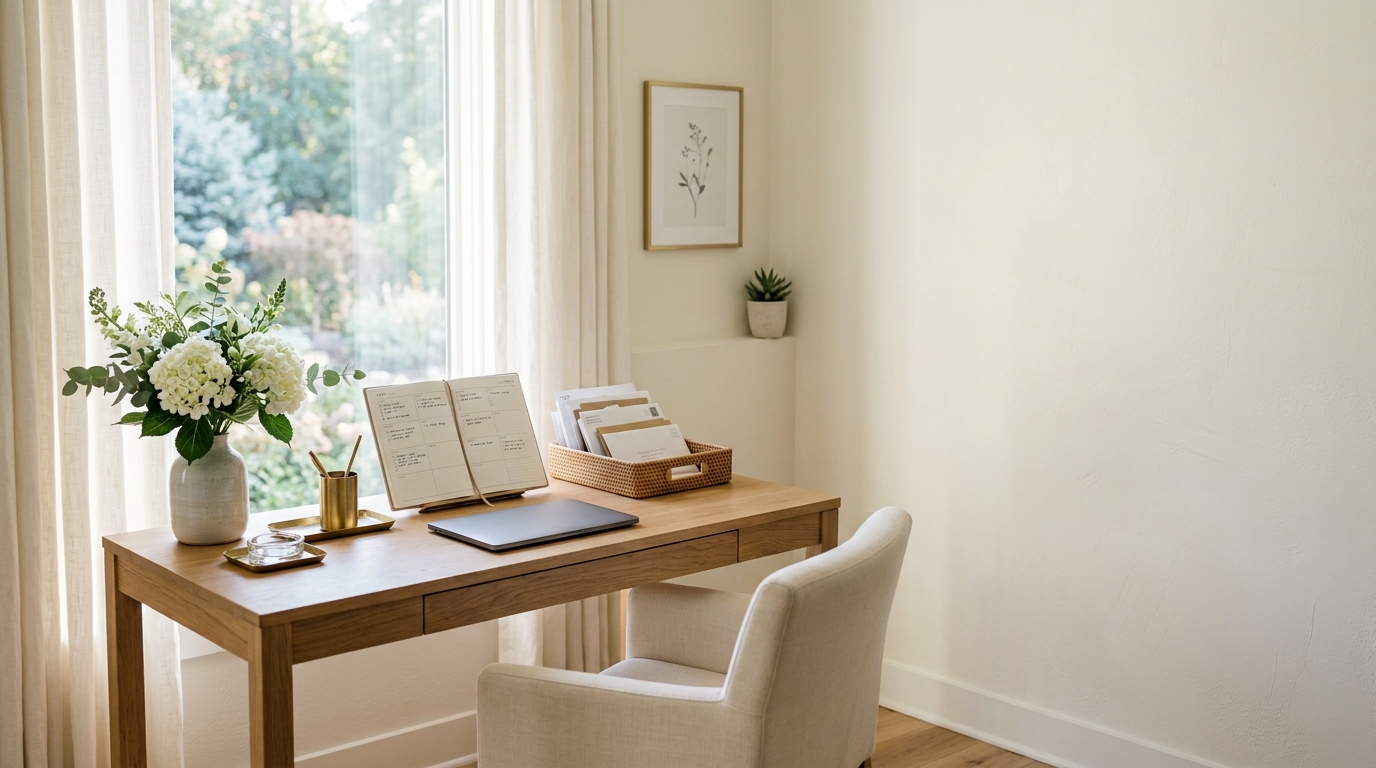
Write down the room, the problem, and what a finished result would look like.
Professional costs: - The fee - Products, sourced correctly the first time - Your hours too, usually far fewer, but a good organizer needs you present for decisions - The discomfort of someone else in your space, handling your things
What you're actually buying with a professional isn't labour. You can move boxes. It's three things: decisions made faster because they carry no history with your belongings, expertise about what actually works in a space, and, most of all, the project finishing.
When DIY Genuinely Wins
I'd rather you not hire anyone for these.
The project is small and defined. One closet, one pantry, one drawer. If you can see the end from where you're standing, do it yourself.
You enjoy it. Some people find this satisfying. If that's you, hiring someone removes something you like.
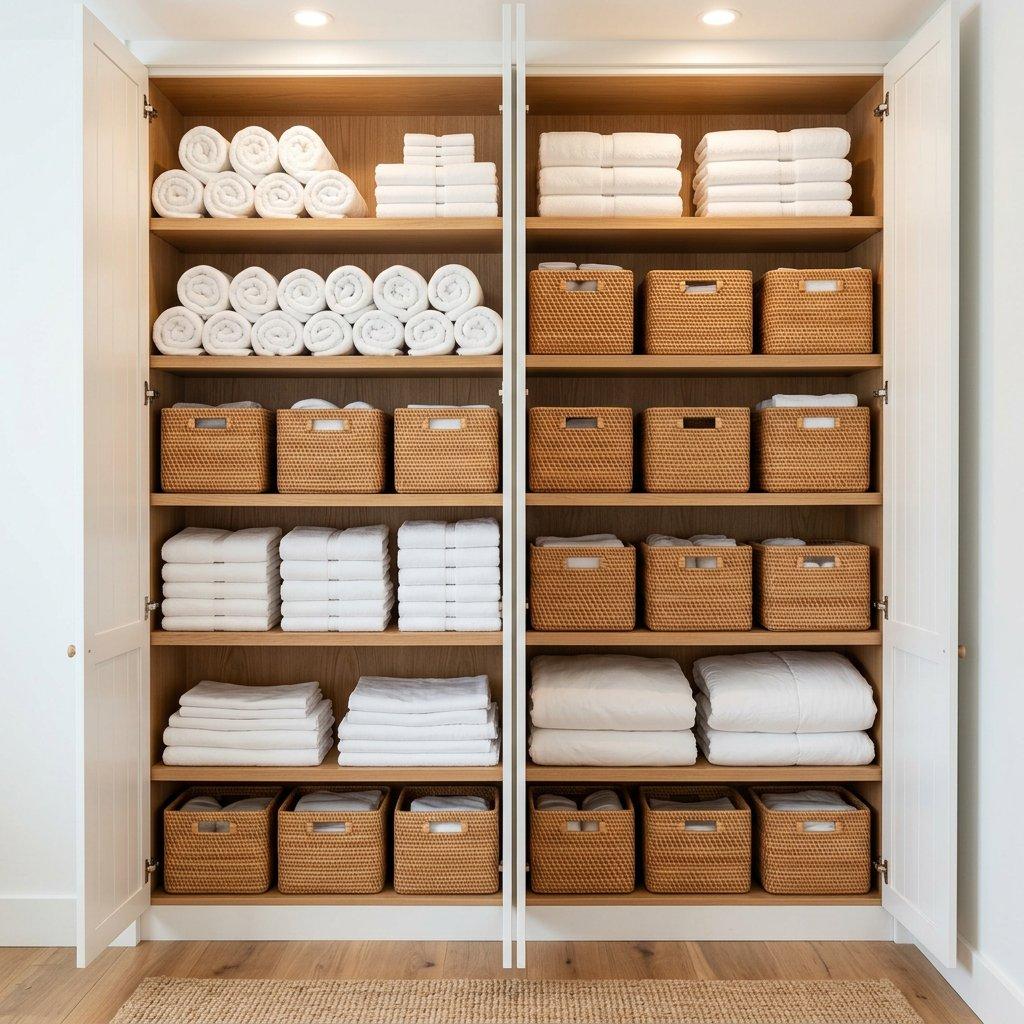
A single closet is a manageable place to start on your own.
Budget is the binding constraint. Not "it feels expensive", genuinely constrained. Decluttering costs nothing and delivers most of the benefit, and a printed plan plus your own hours will get you a long way.
You have time and it isn't urgent. No move, no deadline, no baby coming. Weekends across a few months, at your own pace, is a perfectly good way to organize a house.
You've never actually tried. Do one drawer first. You may discover you're better at this than you thought, and you'll know a great deal more about what you'd be hiring for.
You're not ready to let go of things. This one matters most. No amount of professional help survives an unwillingness to part with anything, you'll pay for a beautiful arrangement of too much stuff, and it will revert. Decluttering has to come first, and only you can do that part.
When Professional Help Is Worth It
You've started and stalled more than once. This is the strongest single signal. Repeated stalling isn't a discipline problem, it's usually a scope problem or a decision-fatigue problem, and both are exactly what an outside person solves.
There's a deadline. A move, a baby, a simcha, a family member arriving, a house going on the market. Deadlines change the calculation entirely, because the cost of not finishing becomes concrete.
The volume genuinely exceeds your available time. A whole house, an estate, a hoarded space, decades of accumulation. Some projects are larger than any number of weekends.
You need systems others will run. If a spouse, children, or staff have to maintain the result, the job isn't arranging, it's designing something operable by people who weren't there. That's a different skill.
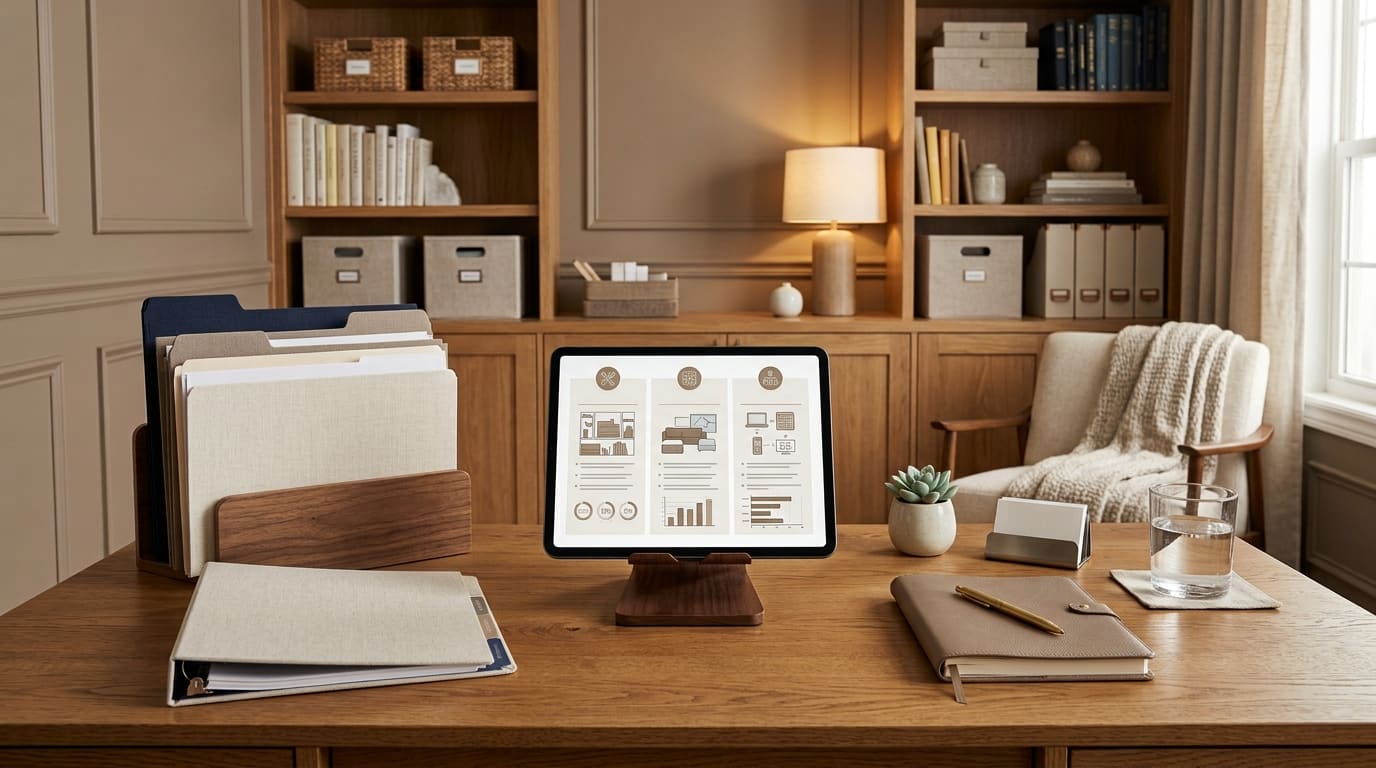
Before hiring, agree on whether the job includes sorting, sourcing, and setup.
Your time has high opportunity cost. If the project would otherwise sit undone for another year, the comparison isn't professional-versus-DIY. It's professional-versus-nothing.
Emotional weight is stalling you. Inherited belongings, a deceased relative's things, a divorce, a downsize. An outside person makes decisions faster precisely because they carry none of the history, and that's not coldness, it's the actual service.
You keep re-organizing the same spaces. If it comes back every six months, the issue isn't tidying. It's that no system was built underneath, which is what a professional is actually for.
Curious About Professional Organizing?
See our organizing packages and find the perfect fit for your home and budget.
The Middle Options Nobody Mentions
It isn't binary, and most people don't know these exist.
Consultation only
An organizer comes for a couple of hours, assesses, and leaves you a plan: zones, product specifications with measurements, a sequence, and a maintenance routine. You do all the work.
Best for: people who are capable and willing but don't know where to start, or who've stalled on planning rather than execution. Lowest-cost professional option by a wide margin.
One room, done properly
Rather than a whole house, hire for the single space that costs you most daily, usually the kitchen, the entry, or a primary closet.
Best for: testing whether you like working with someone, and getting one genuine win. You also learn the method and can apply it yourself elsewhere.
Collaborative
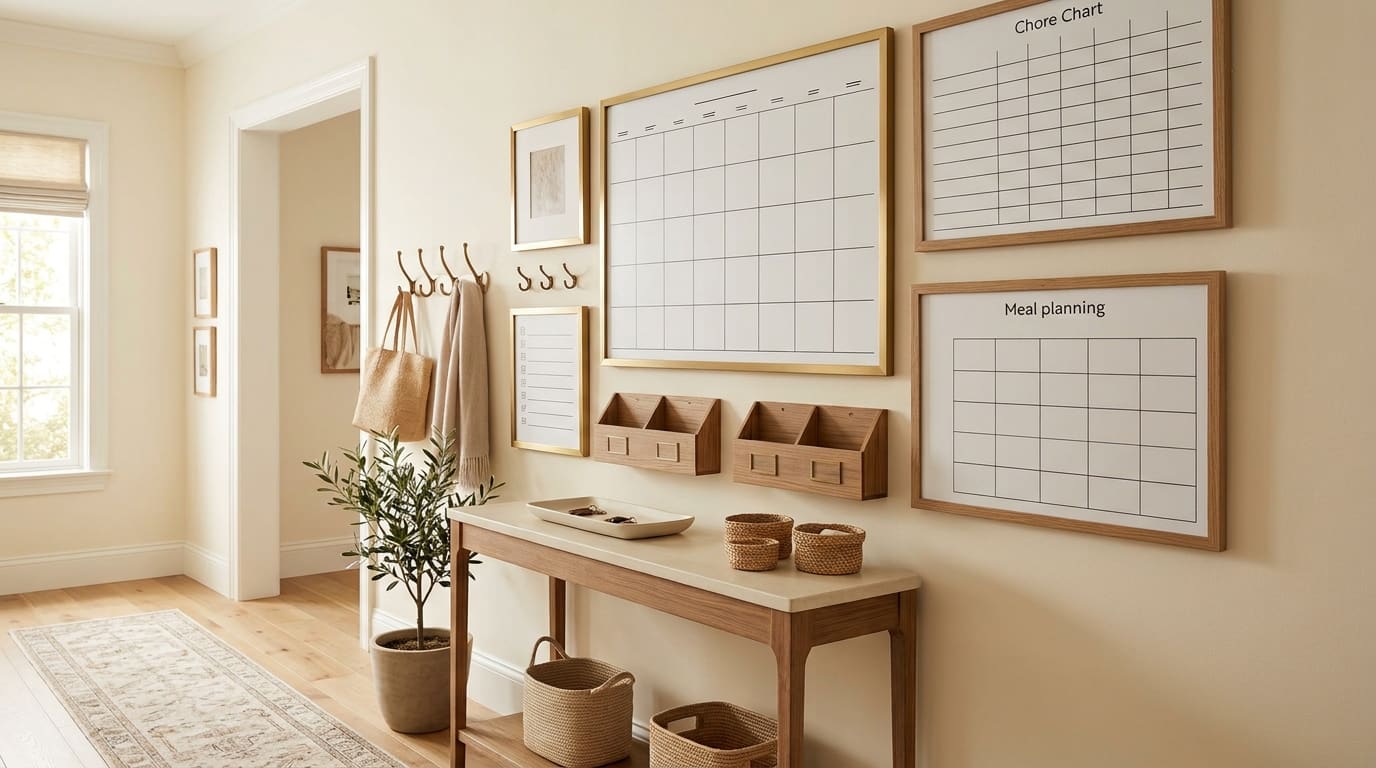
Keep decisions and deadlines where everyone involved can find them.
You work alongside the organizer rather than handing over. Slower per hour, cheaper in total, and you retain every decision.
Best for: anyone uncomfortable with someone else handling their belongings, and anyone who wants to learn the approach.
Decluttering support only
Someone sits with you through the decisions, the genuinely hard part, and you handle the arranging afterwards.
Best for: where letting go is the bottleneck rather than layout.
Virtual
Video walkthrough, plan, product list, check-ins. Cheaper, no one in your house, and increasingly common.
Best for: smaller projects, tight budgets, or places without local options.
Most people who think they need a full-service engagement actually need one of these five.
Making DIY Work Better
If you're going DIY, and plenty of you should, here's what separates the projects that finish from the ones that don't.
Work in containers with edges, not rooms. One drawer, one shelf, one box. Finish it completely, then stop. Rooms have no finish line, which is why they get abandoned at 60%.
Set a timer for twenty minutes and stop when it goes, especially if you're not done. Stopping with energy left is what makes tomorrow possible.
Declutter fully before buying anything. Then measure. Then buy. Buying storage for things you should have removed is the most common way to spend money and end up with the same room.

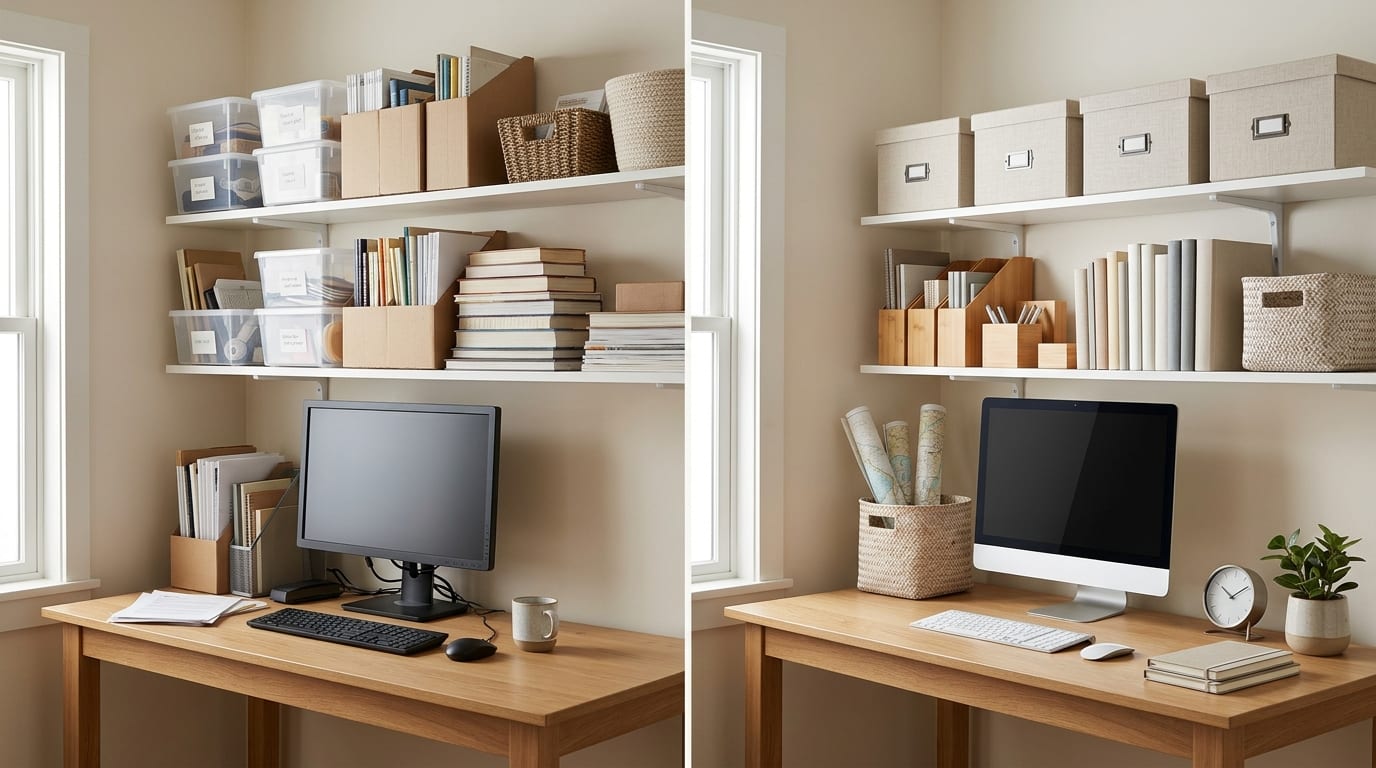
Choose one small area and give it a clear stopping point.
Start where the return is highest, not where it's hardest. The junk drawer, one bathroom cabinet, the surface that annoys you daily.
Do the sentimental categories last. Decision-making genuinely speeds up with practice, and photos and inherited items need that practice.
Build for your worst realistic week, not your best. A system requiring twenty minutes a day from a household that has five will fail, and the failure will feel personal when it's a design error.
Give every item a home and add a fifteen-minute evening reset. That habit does more to keep a house in order than any product. The room-by-room detail is in our home organization checklist.
Getting the Most From a Professional
If you do hire, four things determine whether it's worth it.
Be honest at the consultation. About budget, about how much you'll maintain, about which categories you're not ready to touch. An organizer building for an idealized version of your household is building something that fails.
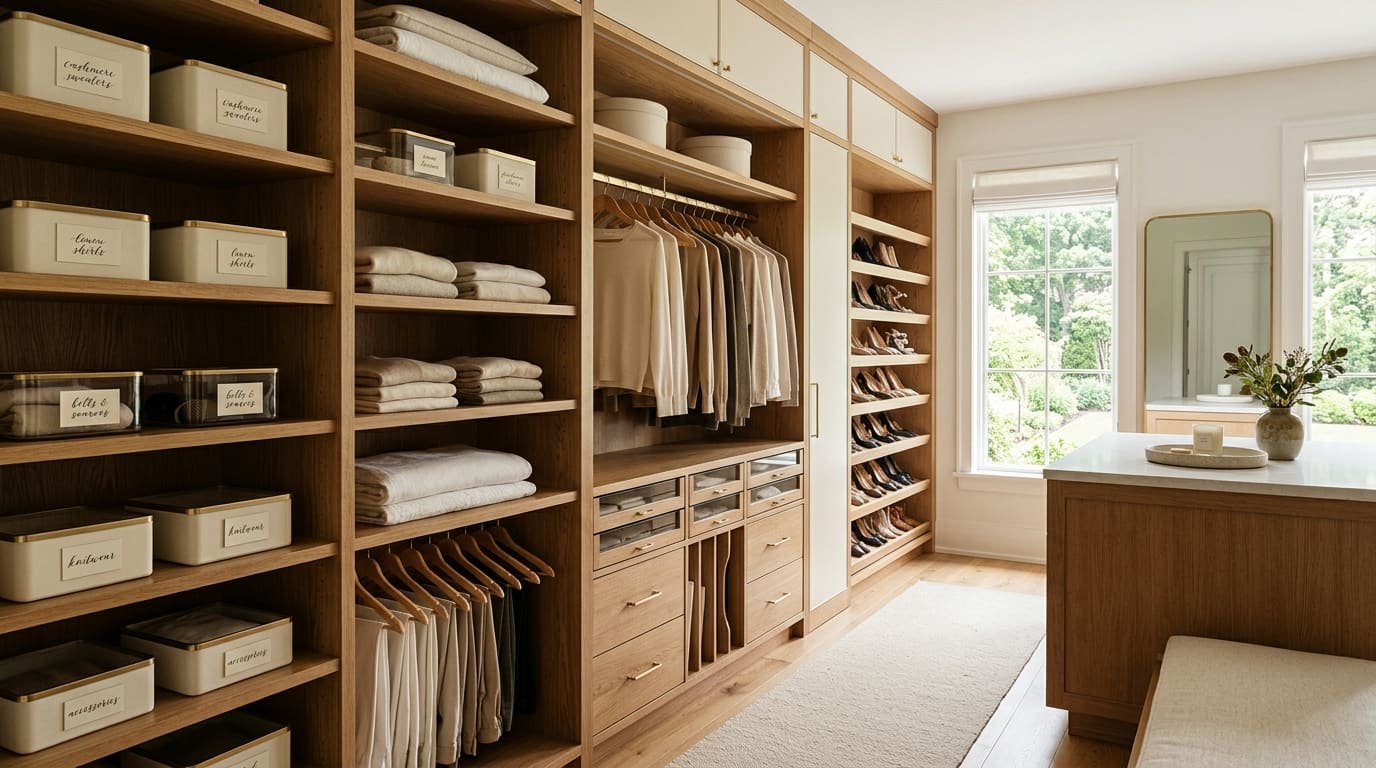
Use labels and storage the household can maintain after the project.
Be present for decisions. The keep-or-let-go calls are yours and nobody can make them for you. The physical work can be delegated; the deciding can't.
Ask what you get at the end. A good engagement leaves you more than a tidy room, zone logic, product specifications so replacements match, and a maintenance routine. If the deliverable is only a before-and-after photo, that's staging, not systems.
Ask about the people who'll maintain it. If you have staff, they should be consulted during design and left with written procedures, bilingually if that's what your household needs. An English-only procedure followed by someone who reads Spanish more comfortably produces errors that get blamed on the person rather than the document.
The Question Underneath
Most of the time, when someone asks whether to hire a professional organizer, the real question isn't about organizing at all. It's am I allowed to buy my way out of this?
Worth answering directly. You outsource work all the time without a second thought, you may not change your own oil, cut your own hair, or do your own taxes. Household organization sits in a strange category where people feel they ought to manage it personally, largely because it happens at home and historically went unpaid.
It's work. Work can be bought. Whether it should be, in your case, depends entirely on the resource comparison at the top of this article, time, money, expertise, and whether the project will otherwise finish.
And if the answer is DIY, that's not the lesser option. It's the right one for the situation. The house doesn't know who organized it.
Frequently Asked Questions
Is hiring a professional organizer worth it?
It depends on the situation rather than the person. It's worth it when you've started and stalled repeatedly, when there's a deadline, when the volume exceeds your available time, when emotional weight is blocking decisions, or when you need systems that other people, a spouse, children, staff, will maintain. It isn't worth it for a single closet, a short-term rental, or a household not yet ready to let go of things.
What's the difference between DIY and hiring a professional organizer?
DIY costs your hours, the products you buy wrong first, decision fatigue, and the real risk of not finishing. A professional costs a fee plus products, and buys you three things: faster decisions from someone with no history with your belongings, expertise about what works in a space, and the project actually reaching completion.
Can I hire an organizer for just a plan instead of the whole job?
Yes, consultation-only is the lowest-cost professional option and most people don't know it exists. An organizer assesses your space and leaves you zones, product specifications with measurements, a sequence, and a maintenance routine, and you do all the work yourself. Other middle options include one room done properly, collaborative sessions, decluttering support only, and virtual consultations.
Should I declutter before hiring a professional organizer?
You don't have to, but you do have to be willing to. No amount of professional help survives an unwillingness to part with anything, you'll pay for a well-arranged excess and watch it revert. Decluttering decisions are yours regardless of who you hire, so if you're not ready for that part, wait.
How do I know if I need a professional organizer?
The strongest signal is having started and stalled more than once, because repeated stalling usually indicates a scope or decision-fatigue problem rather than a discipline one. Other clear signals: a hard deadline, volume beyond your available time, spaces you keep re-organizing every few months, and emotional weight that's blocking decisions.
What should I expect to get at the end of a professional organizing project?
More than a tidy room. Look for the zone logic and the reasoning behind it, product specifications so replacements match, a maintenance routine you can actually keep, and, if you have household staff, written procedures they can follow. If the only deliverable is a before-and-after photo, that's staging rather than systems.
How can I make DIY organizing actually work?
Work in small defined areas rather than whole rooms, set a twenty-minute timer and stop when it goes, declutter fully before buying any storage, start where the return is highest rather than where it's hardest, leave sentimental items until last, and build for your worst realistic week. Finishing small areas completely is what generates the momentum that whole-room attempts destroy.
---
Ready for a Home That Works For You?
If you've read this far and the honest answer is DIY, take the checklist and go, that's a real answer and the right one for a lot of households.
If the answer is that you've started three times, there's a deadline, or other people need to be able to run the result, that's the situation we're built for. Not a beautiful afternoon, systems designed to survive without us, documented for whoever maintains them.
- ✓ Professional Organizing, consultation-only through whole-home, whichever fits
- ✓ Moving & Unpacking, decluttered before, set up properly after
- ✓ Household Management, routines and bilingual SOPs your staff can run
- ✓ Ongoing Support, because maintenance decides whether it lasts
Related Reading

Sort + Place is a professional organizing and household management practice serving families in Lakewood, New Jersey and the surrounding tristate area.
Want this running in your own house?
We build the systems, label the shelves and train the people who keep it all going.
Book Your Consultation