
May 19, 2026
How to Train Household Staff to Maintain Home Standards
The best household staff aren't the ones who ask the fewest questions. They're the ones who know where to find the answer without needing to ask.
That only works if the answers live somewhere reliable. Here's how to set that up.
Write it down once

Photograph before you touch anything. The photo is the standard.
Standards, not reminders. If how the towels get folded or where the extra linens go exists only as something you've explained verbally a few times, you are the bottleneck for every new hire and every substitute shift.
Documented standards, specific enough to check against, mean the expectation doesn't depend on you being reachable.
Give every shift a starting point. Staff shouldn't have to guess what to do first. A consistent first stop, check the day's tasks, check any household notes, then move, removes the ambiguity that otherwise eats the first twenty minutes of every shift.
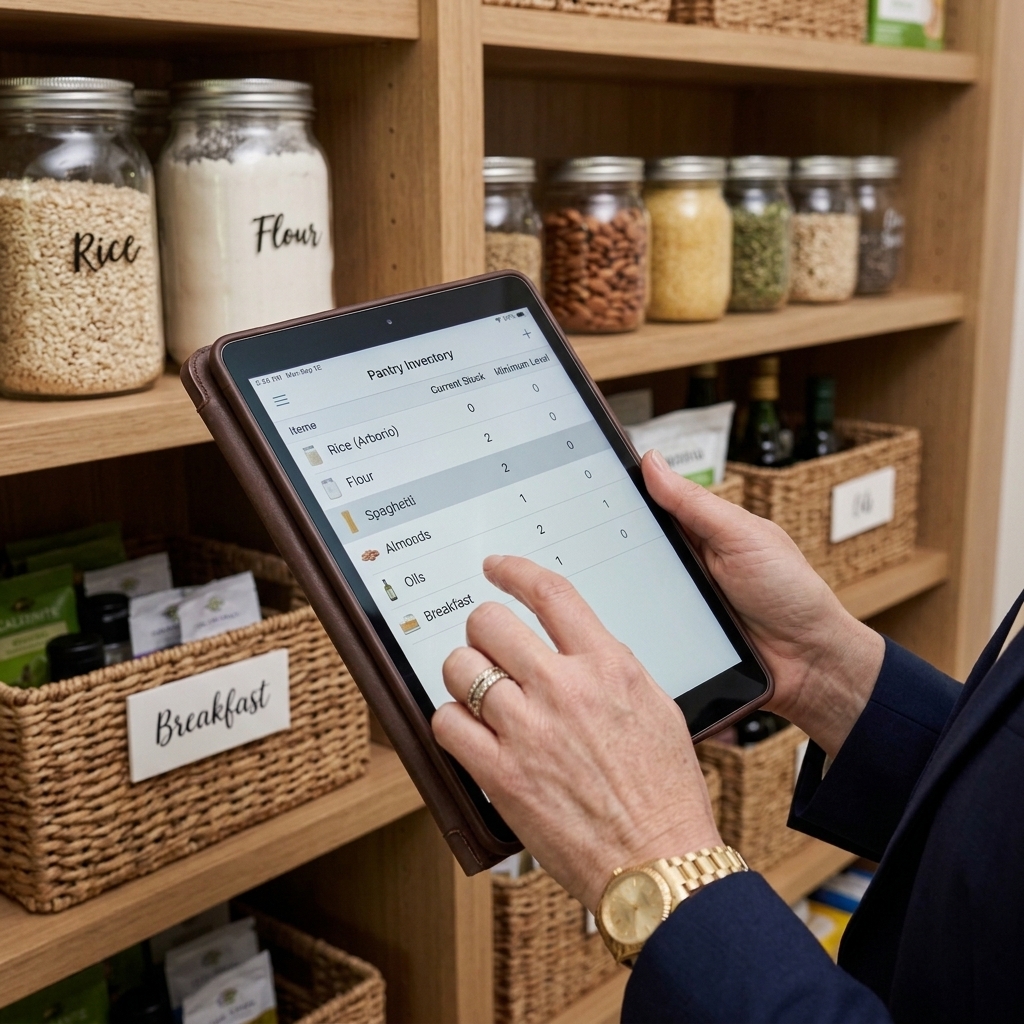
Make "where does this go" a lookup, not a text message. When staff aren't sure where something belongs, the answer should be checkable: the item's assigned location first, household notes second, a supervisor last.
That order keeps small questions from becoming interruptions, and keeps the answer the same no matter who's asking or who happens to be free.
Set it up so people can do their jobs
Match access to role, not to trust. Giving staff exactly the access their role needs isn't about doubting anyone. It protects sensitive household information and stops an honest mistake becoming a change to something important.
Clear roles are a kindness as much as a safeguard. Nobody has to worry about touching something outside their lane.
Assign tasks to people, not to a list. A shared list that doesn't say who owns what becomes a list nobody feels responsible for. This task, this person, this day is what actually gets done.
Ask for updates in real time. Something moved, used up or finished should be recorded when it happens, not reconstructed from memory at the end of the day. Real-time updates are what keep the next shift working from an accurate picture rather than yesterday's.
Leave room for what staff notice

Show, do together, watch, document.
Give feedback somewhere to go. Staff are usually first to see what isn't working, a bin in the wrong place, a task that doesn't make sense as written. With no designated place to log it, that either gets lost or becomes an offhand comment that never reaches anyone who could act.
Replace texting with something that doesn't disappear. Instructions sent by text are buried within a day. The same instruction kept somewhere central and searchable is still findable a month later, by the person who received it and by whoever covers their shift.
The point
Training staff well isn't about finding people who need less guidance. It's about building a house where good guidance is always exactly where they'd look for it.
Frequently Asked Questions

Room, frequency, tools, numbered steps, and a definition of done. One procedure, every house.
How do I train household staff without repeating myself constantly?
Write the standard down once, specifically enough that someone can check their work against it, and keep it somewhere they can reach without asking you. Repetition is usually a sign the answer isn't findable rather than that the person wasn't listening.
How much access should household staff have?
Exactly what their role requires. That isn't about trust, it's about protecting sensitive information and making it impossible for an honest mistake to change something important. Clear limits also spare staff from worrying they'll touch something they shouldn't.
Should household tasks be assigned to individuals or to a shared list?
To individuals, with a day attached. A shared list with no owner becomes a list nobody feels responsible for, and the work that gets skipped is usually the work nobody's name was on.
What's the best way to give household staff instructions?
Somewhere central and searchable rather than by text message. A text is buried within a day. The same instruction kept in one place is still findable a month later, both by the person who received it and by whoever covers their shift.
Related Reading



Sort + Place is a professional organizing and household management practice serving families in Lakewood, New Jersey and the surrounding tristate area.
Want this running in your own house?
We build the systems, label the shelves and train the people who keep it all going.
Book Your Consultation