September 1, 2026
Home Organization For Busy Moms
Most organizing advice was written for a version of your life that doesn't exist.
It assumes an uninterrupted Saturday. It assumes nobody needs you mid-task. It assumes that once a system is built it stays built, rather than being disassembled nightly by people who live there. And it quietly assumes that if it isn't working, you didn't try hard enough.
You don't need better discipline. You need systems built for interruption.
To organize a busy family home you have to design around the actual conditions: fragmented time, a household that changes shape every few months, and a person carrying most of the invisible tracking. This guide covers what to build when you have twenty minutes rather than a weekend, which systems earn their keep, how to move some of the load off yourself, and what to let go of when the season is hard.
Overwhelmed Mom?
Download our Busy Mom's Organization Guide with realistic systems for chaotic seasons.
Why Standard Advice Doesn't Fit
Four assumptions, all of them wrong for a household with young children.
"Set aside a weekend." You don't have one. You have fifteen minutes between things, several times a day, and one of those will be interrupted.
"Build the system once." A system that fits a toddler doesn't fit a five-year-old. School years change routines completely. Your household reorganizes itself every few months whether you planned it or not.
"Just be consistent." Consistency assumes stable conditions. Yours include illness, growth spurts, and weeks where nothing goes as expected.
"A place for everything." True, and incomplete, it has to be a place the children can reach and understand, or every task routes back through you.
The fix isn't trying harder against those conditions. It's designing for them.
Build in Twenty Minutes, Not Weekends
The single most useful shift: stop trying to organize rooms.
Work in containers with edges. One drawer. One shelf. One basket. Finish it completely, then stop.
That feels absurdly small when the whole house needs attention. It works for three reasons:
1. You actually finish, and finishing is what generates the willingness to do it again 2. Twelve finished drawers is a finished dresser, progress accumulates, abandoned rooms don't 3. It fits the time you actually have, rather than the time you'd need to clear
Set a timer
Twenty minutes. When it goes, stop, especially if you're not done. Stopping with energy left is what makes tomorrow possible. Working to exhaustion is why the next session never happens.
Start where the return is highest
Not the hardest area, not the sentimental one. Start where a small win shows immediately:
- The drawer you open most and hate every time
- One bathroom cabinet
- The entryway spot where everything lands
- The snack shelf
Momentum is the actual resource here. Protect it.
The Systems That Earn Their Keep
You cannot build everything. These four return the most for a household with children.
1. The landing zone
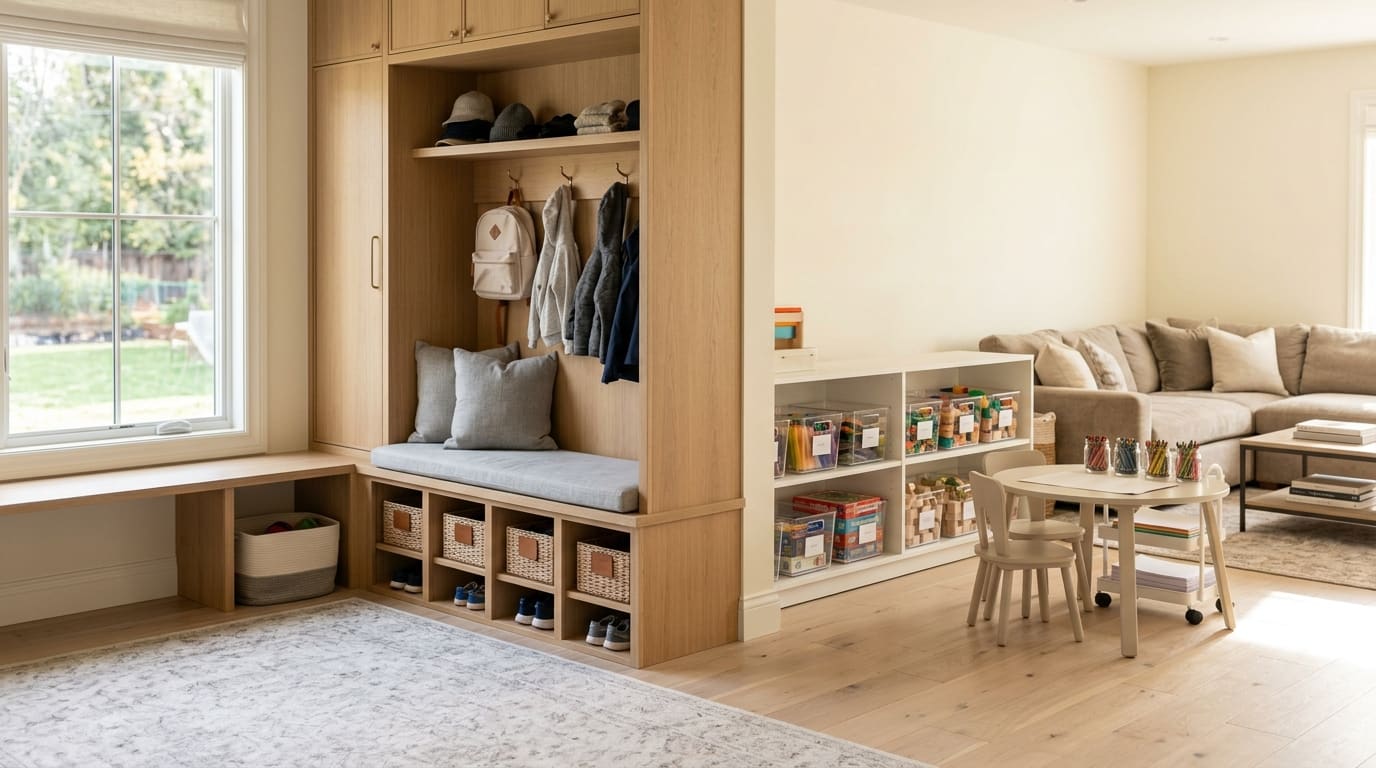
Backpacks, mail, shoes, keys, forms, all of it needs a defined home before it reaches a counter. Hooks at kid height, a bin per child, one tray for mail.
Without this, the kitchen counter becomes the household's default surface and stays that way permanently. This is the highest-return single change in most family homes.
2. Kid-height everything
Every task a child can do independently is an interruption you don't get.
- Snacks and cups in a low cabinet, outside the cooking area
- Their plates and bowls in a low drawer, so "clear your plate" is actually possible
- A low fridge shelf with drinks and ready snacks
- Their own hooks and bins at their height
- Picture labels for anyone who can't read yet
Five to ten interruptions a day removed, most of them during the hours you can least afford them.
3. The evening reset
Fifteen minutes after dinner: kitchen cleared, main room picked up, tomorrow's things staged.
This one routine changes how every morning feels more than any organizing project will. It's also the thing that keeps the house from ever fully degrading, which means it never needs rescuing.
4. One weekly planning session
Twenty minutes: check the week's calendar, plan meals, build the shopping list, note anything unusual.
That single session removes a decision from every day of the following week. Pair it with a meal planning system built on themed nights and the 5 p.m. question mostly stops being asked.
Four systems. None takes more than twenty minutes at a time. Build them one at a time, a few weeks apart.
The Load Nobody Sees
There's a category of work in your household that produces nothing visible: noticing, anticipating, remembering, deciding, and monitoring.
Researchers of unpaid domestic work describe this as the cognitive dimension of household labor, and studies of it, including Allison Daminger's work on how couples divide this specific kind of work, find it substantial and unevenly distributed, largely because it's invisible. Someone can see a load of laundry being folded. Nobody can see you tracking that the field trip form is due Thursday, that the four-year-old is nearly out of shoes, and that the birthday present hasn't been bought.
That tracking is most of what makes a busy household tiring, and it's the part organizing advice never addresses.
Move it out of your head
- Onto a shared calendar, one, that everyone uses. If it isn't there, it isn't happening
- Onto a visible surface, a wall calendar, a family command center, a whiteboard where the week is legible without asking you
- Into a written list anyone can add to and anyone can read
You will have to stop being the backup memory for a few weeks while people adjust. That part is uncomfortable and it's the only way it moves.
Hand off whole categories, not tasks
"Help me with the laundry" leaves the tracking with you. "Laundry is yours" moves it, including noticing it needs doing and that the detergent is low.
Have the specific conversation: "I want to hand off these three categories completely, including the remembering. Which do you want?" That's answerable in a way "I need more help" isn't.
The same applies to children, at their level. A six-year-old can genuinely own their snack for tomorrow. A ten-year-old can own the recycling. One complete task beats five tasks they assist with, because ownership includes the noticing.
Seasons: When to Build and When to Hold
Not every stretch is a building stretch, and treating them all the same is why people conclude systems don't work for them.
Holding seasons
A newborn. An illness. A move. A hard stretch at work. Yom Tov. A pregnancy that's taking everything you have.
In a holding season you don't build. You hold the floor:
- Everyone gets fed
- Everyone gets where they need to be
- Clean clothes exist
- The kitchen is usable
That's it, and that's success. Not a reduced version of success, the actual goal for that stretch.
Building seasons
The calmer weeks. After a routine settles. The start of a school year. Any point where you have slightly more capacity than the week requires.
Build one thing. Not four. One system, allowed to become automatic before you add another.
Knowing which one you're in
If the thought of adding a new system makes you tired rather than hopeful, you're in a holding season. That's information, not a failure, and it will change.
When It Falls Apart
It will. Every household's does.
Expect drift. A week goes sideways and things slide. That's the system working under load, not the system failing.
Have a defined reset. Not a weekend rebuild, a fifteen-minute evening reset, or one planning session. The way back should be the same size as the routine, which is exactly what makes returning possible.
Cut before you quit. If a system isn't holding after a month, it needs more maintenance than your household has. Halve it. Then halve it again if needed. A system running at 40% of its original ambition, permanently, is worth far more than a complete one that lasted three weeks.
Aim for 80%. A house that's 80% right most of the time is a functioning house. Chasing the last 20% costs more than it returns, and the chase is where the misery lives.
Getting the Household Involved
Children
- Age 3-5: toys into bins, carrying laundry, wiping a low surface
- Age 6-9: making their bed, setting and clearing the table, packing tomorrow's snack
- Age 10-13: vacuuming, their own bathroom, their own laundry
- Age 14+: any adult task
Show them once, properly. Then accept their standard rather than yours, a bin they filled untidily is a bin you didn't fill.
Your partner
Ownership of categories, not assistance with tasks. Named, complete, including the remembering.
Help, if you have it
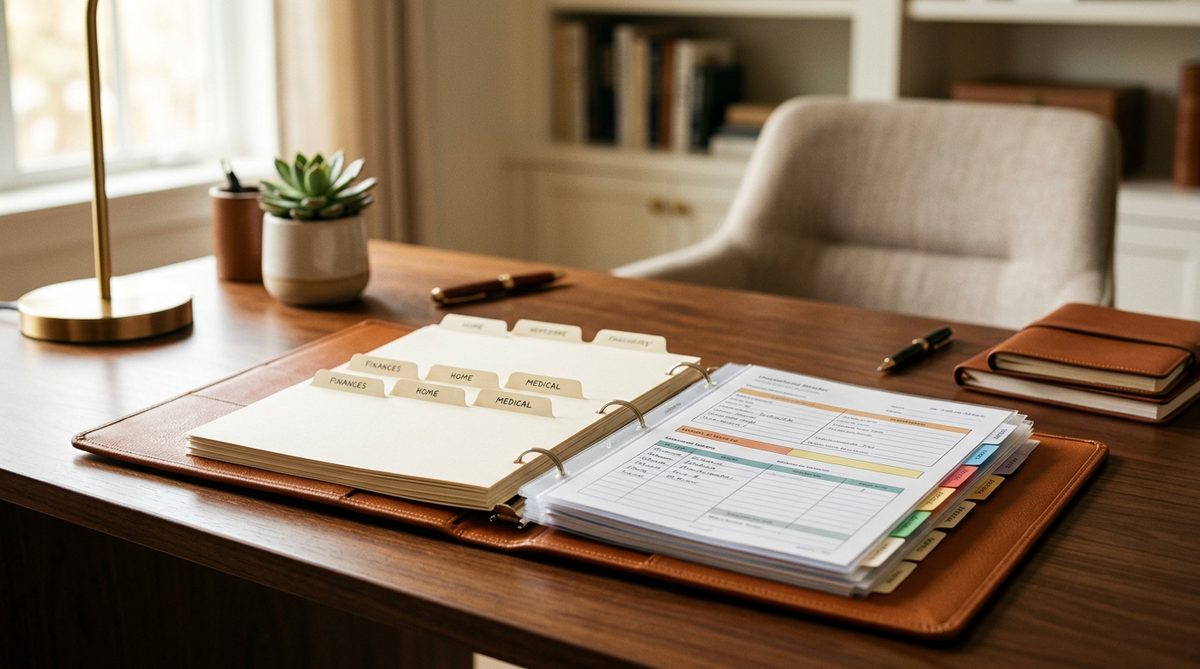
If you employ any help, the return depends entirely on documentation. Written procedures, standards, and a defined way to report problems, otherwise you're paying for someone's time and then spending your own directing them.
Write it bilingually if that's what your household needs. An English-only procedure followed by someone who reads Spanish more comfortably produces errors that get blamed on the person rather than on the document.
The wider structure this all sits inside is a household management system, and the cleaning piece specifically is covered in a weekly cleaning schedule built one zone per day rather than one exhausting Saturday.
Need Understanding Help?
Our family organization specialists work with busy moms to create sustainable systems.
Book Your Family Organization Consultation
What to Stop Doing
Some of what's costing you isn't organizing at all.
Stop comparing your house to photographs. The homes in those images either have no children in them or were tidied for the shot. Both.
Stop rebuilding from scratch. When something drifts, restore it. Don't redesign it. Redesigning is a project; restoring is fifteen minutes.
Stop organizing at 10 p.m. Decisions made then are ones you'll live with all year, and they're made badly.
Stop keeping things you don't want out of guilt. Every retained item costs storage, cleaning, and a small decision every time you see it.
Stop doing tasks other people could own. Even imperfectly. Especially imperfectly.
And stop treating a hard season as evidence about you. It's evidence about the season.
Frequently Asked Questions
How do I organize a busy family home with no free time?
Work in twenty-minute blocks on defined small areas, one drawer, one shelf, one basket, and finish each completely before starting another. Overwhelm comes from the size of the task rather than the effort, so shrinking the field is the actual fix. Twelve finished drawers is a finished dresser, and it fits the time you genuinely have.
What should a busy mom organize first?
The landing zone where backpacks, mail, and shoes arrive, because without a defined home for that flow the kitchen counter becomes the household's default surface. After that, move snacks, cups, and children's dishes to heights your youngest can reach, every task a child can do independently is an interruption you don't get.
How do I get my family to actually help around the house?
Hand off complete categories rather than asking for help with tasks, because "help" leaves the noticing and remembering with you and that's the heavier half. Name three categories, explain that the handoff includes the tracking, and let your partner choose. For children, give one whole age-appropriate task rather than several partial ones.
Why do my organizing systems always fall apart?
Usually because the system required more daily maintenance than your household actually has, or because it was built for a stage your children have already outgrown. Cut it in half rather than abandoning it, and define a fifteen-minute reset routine, the way back should be the same size as the routine itself.
How do I stay organized during a really hard season?
Hold the floor rather than building: everyone fed, everyone where they need to be, clean clothes available, kitchen usable. That's the goal for that stretch, not a reduced version of it. Building seasons come back, and adding a new system while you're in a holding season is what causes the collapse.
How much should I expect my kids to help?
Ages three to five can put toys away and carry laundry; six to nine can make beds, set and clear the table, and pack their own snack; ten to thirteen can vacuum and manage their own laundry and bathroom. Show them once and then accept their standard rather than correcting to yours, a bin they filled is a bin you didn't.
Is it normal for a family home to be messy?
Yes. A home with children in it is being actively used, and active use produces mess. A realistic target is a house that's about 80% in order most of the time, with a defined reset to bring it back, chasing the last 20% costs far more than it returns and is where most of the frustration lives.
---
Ready for a Home That Works For You?
If your systems keep falling apart, the most likely explanation isn't you. It's that they were designed for conditions you don't have, uninterrupted time, a household that holds still, and one person willing to carry all the remembering.
We build for the actual conditions. Twenty-minute systems, kid-height everything, and documentation that moves the tracking out of your head and somewhere other people can reach it.
- ✓ Professional Organizing, spaces built around how your family actually lives
- ✓ Moving & Unpacking, set up right the first time, so you're not redoing it
- ✓ Household Management, routines, checklists, and bilingual SOPs
- ✓ Ongoing Support, because maintenance is what decides whether it lasts
Related Reading


Sort + Place is a professional organizing and household management practice serving families in Lakewood, New Jersey and the surrounding tristate area.
Want this running in your own house?
We build the systems, label the shelves and train the people who keep it all going.
Book Your Consultation